
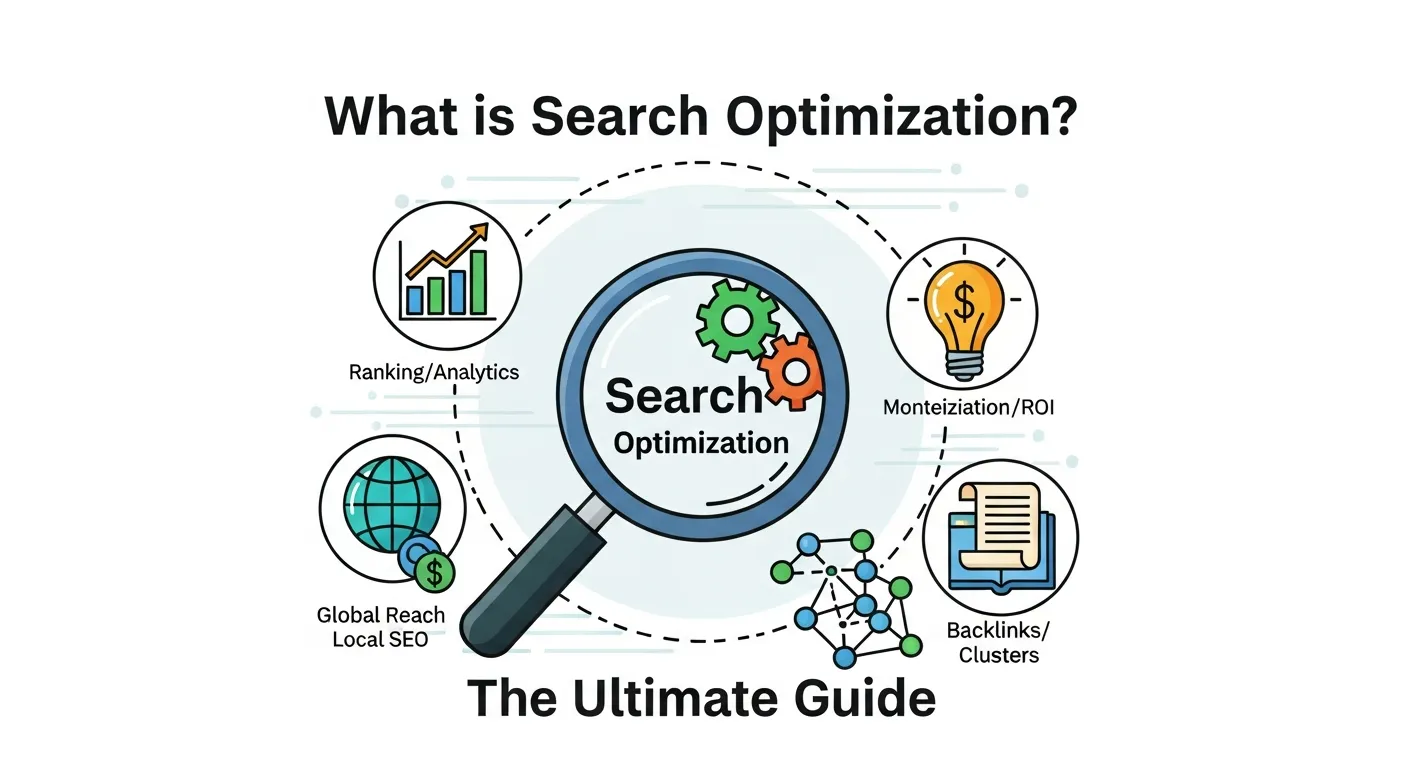
Search optimization improves website visibility in search engines through technical, on-page, and off-page strategies. By focusing on user experience, content quality, and authority building, businesses can increase rankings, drive organic traffic, and achieve long-term digital growth.
Type a question into a search engine, hit enter, and you instantly get millions of results. Most of us click on one of the first three links and never look at the second page. Earning a spot at the top of those results does not happen by accident. It requires a specific, highly intentional process.
Understanding what is search optimization is the first step toward dominating your digital landscape. What is search optimization? It is the practice of improving a website to increase its visibility in search engines. When people look for products, services, or information related to your business, you want your website to appear as high up as possible. Higher visibility leads to more website traffic, which ultimately drives more customers and revenue.
Learning the mechanics of what is search optimization can feel overwhelming at first. Search algorithms update constantly, and the rules of the game shift without warning. However, the core principles remain remarkably stable. By focusing on creating great user experiences and providing valuable information, you can build a reliable stream of organic traffic. This guide breaks down exactly what is search optimization and how you can apply it to your own digital presence.
Why SEO is Crucial for Online Visibility

Search engines are the primary way people navigate the internet. While social media and email marketing drive traffic, search engines direct the vast majority of online activity. If your website does not rank well for relevant terms, you are essentially invisible to potential customers. When asking what is search optimization, you must understand its role in generating consistent visibility.
Compounding Returns on Investment
Unlike paid advertising, where traffic stops the moment you turn off your budget, search optimization provides compounding returns. Once you earn a high search ranking, you continue to receive consistent traffic without paying for every click. This makes understanding what is search optimization one of the most cost-effective digital marketing strategies available.
Building User Trust
Users also inherently trust organic search results. People know that ads are paid placements. Earning a top organic spot signals to users that a search engine considers your site an authoritative, reliable source of information. Mastering SEO basics helps you capture this inherent trust.
Case Study Example: SEO and Online Sales
Consider a small e-commerce website specializing in handmade jewelry. Initially, the site struggled for visibility, relying mostly on social media for sales. Once they invested in understanding what is search optimization and began optimizing product pages for keywords like “custom silver rings” and “handmade gold bracelets,” search ranking started to rise. Organic traffic from search engines soon made up 60% of total sales—demonstrating that investing in search optimization pays off for every niche and business size.
Key Components of a Strong Strategy
Effective implementation of what is search optimization requires a multifaceted approach. You cannot simply stuff keywords onto a page and expect to achieve a high search ranking. Modern search engines evaluate hundreds of different signals to determine which pages offer the best answers to a user’s query.
A comprehensive strategy breaks down into three main pillars: technical, on-page, and off-page optimization. By balancing these elements, you create a website that search engines can easily understand and that human users actually want to visit.
Technical SEO: The Backbone of Your Website
Before a search engine can rank your content, it must be able to find it, read it, and understand it. Technical SEO focuses on the backend architecture of your website. It ensures that search engine bots can easily crawl and index your pages, which is a foundational element of what search optimization is.
Prioritizing Page Speed
Page speed is a major technical factor. Users expect pages to load in seconds, and search engines penalize slow websites. Optimizing image sizes, leveraging browser caching, and minimizing complex code can drastically improve your load times. For WordPress users, plugins like WP Rocket and image compressors like TinyPNG help boost speed with minimal effort.
Ensuring Mobile Friendliness
Mobile friendliness is another critical requirement. Most web browsing happens on mobile devices. Search engines now predominantly use the mobile version of your site to determine rankings. Your layout must adapt seamlessly to smaller screens, with readable text and easily clickable navigation elements. Use Google’s Mobile-Friendly Test to spot issues before they affect your search ranking.
On-Page SEO: Optimizing Your Content

On-page SEO involves optimizing individual web pages to rank higher and earn more relevant traffic. This is where you directly apply your target keywords and address what is search optimization directly on your site. You need to ensure your content aligns with what users are actively searching for.
Mastering Keyword Optimization
Start your keyword optimization by placing your primary keyword in the page title, the URL, and the main heading. From there, weave related terms naturally throughout the body text. Search engines have grown highly sophisticated; they understand synonyms and context. Writing naturally for human readers is far more effective than awkwardly forcing exact-match phrases into every sentence.
- Example: A page about “eco-friendly cleaning tips” should also mention phrases such as “green cleaning solutions,” “natural cleaning products,” and “non-toxic home cleaning.”
Structuring Content Logically
Beyond text, on-page SEO includes structuring your content logically.
- Use descriptive subheadings to break up large blocks of text.
- Add internal links that point to other relevant pages on your site.
- Ensure your URL structures are clean and descriptive.
- Optimize your image alt-tags so search engines understand visual media.
This helps users navigate your content and allows search engines to understand the relationship between different topics on your domain.
Advanced On-Page Tips
- Use schema markup to highlight specific data such as reviews, prices, and events for richer search results.
- Place CTAs (calls to action) at logical spots to guide user actions, increasing engagement and reducing bounce rate.
Off-Page SEO: Building Authority and Trust

Off-page SEO encompasses all the actions taken outside of your own website to impact your rankings. The most important off-page signal is the backlink. When another reputable website links to yours, search engines view it as a vote of confidence.
Not all backlinks carry the same weight. A single link from a highly respected industry publication provides far more value than dozens of links from low-quality directories. Earning high-quality backlinks requires relationship building, digital PR, and publishing exceptional content that naturally attracts citations.
Off-Page SEO Strategies
- Guest posting on niche-relevant blogs to build backlinks and brand exposure.
- Creating shareable infographics or data studies, which naturally attract organic links.
- Reaching out to industry influencers for collaborations and resource placements.
- Participating in community Q&A forums (like Quora or Reddit) to establish expertise and drive referral traffic.
The Role of Content in SEO
Content is the vehicle that delivers your strategy. Without high-quality articles, videos, or product descriptions, you have nothing to optimize. Search engines exist to provide answers, and your content must be the best available answer for your target queries.
To explore more foundational concepts and learn how content interacts with optimization, you can review this guide on search engine optimization to broaden your perspective.
Matching Search Intent
Understand the search intent behind a keyword. Is the user looking to buy something, learn a concept, or find a specific website? Your content must perfectly match that underlying goal. If someone searches for “how to fix a leaky faucet,” they want a step-by-step guide, not a sales pitch for a plumbing service.
Types of Search Intent:
- Informational: Queries like “what is search optimization” need clear, educational content.
- Transactional: Phrases such as “buy SEO books online” demand direct product pages.
- Navigational: Queries for specific brands or services require landing pages matching the intended destination.
Comparing Good vs. Bad SEO Content
|
Feature |
High-Quality SEO Content |
Poor SEO Content |
|---|---|---|
|
Readability |
High, uses short paragraphs |
Low, giant walls of text |
|
Keyword Optimization |
Natural, semantic inclusion |
Stuffed, unnatural repetition |
|
Value |
Solves user problems deeply |
Fluff, offers no real answers |
|
Formatting |
Uses H2s, H3s, and bullet points |
Unstructured and hard to skim |
Regularly publishing fresh, accurate, and comprehensive content signals to search engines that your site is active and relevant. Create in-depth resources that thoroughly cover a topic, answering follow-up questions the user might have before they even need to ask them.
Case Studies: Success Stories in Search Optimization
Local Business SEO Success
A local bakery focused on keyword optimization by targeting phrases like “best cupcakes near me” and “gluten-free cakes downtown.” They updated their website with clear on-page SEO, optimized their Google Business Profile, and encouraged customer reviews. Within a few months, the bakery saw a 300% increase in search engine visibility and tripled foot traffic—all through diligent search optimization.
Enterprise SEO Turnaround
A large SaaS company struggled with declining search rankings due to technical SEO flaws—slow site speed, duplicate content, and poor mobile usability. After a full audit and implementation of technical SEO basics, their organic traffic rebounded, and several product pages began ranking in the top three for valuable industry keywords.
Measuring Success: Tools and Metrics
You cannot improve what you do not measure. Tracking your efforts helps you fully grasp what is search optimization in practice and where you need to adjust your strategy. Google Analytics and Google Search Console are two free, indispensable tools for monitoring performance.
Google Search Console shows you exactly which queries bring users to your site, your average search ranking, and how often people click your links in the search results. Key metrics to watch include organic traffic volume, keyword rankings, and bounce rate. Monitor your conversion rates to ensure the people finding your site through search engines are actually taking valuable actions.
Other Important Metrics
- Pages per Session: Indicates how deeply users engage with your site.
- Average Session Duration: Higher numbers suggest your content is holding users’ attention.
- Click-Through Rate (CTR): Tracks how often users click your link compared to total impressions.
- Core Web Vitals: Google measures user experience using metrics such as loading speed, interactivity, and layout stability.
Using Data to Refine Your Strategy
Regular reviews help you spot new keyword opportunities, underperforming pages to refresh, and technical issues that might be holding your rankings down.
Advanced Search Optimization Tactics
Structured Data and Rich Snippets
Implementing structured data (schema markup) helps search engines better understand your content and can enhance your result listings with rich snippets. These eye-catching search features can boost your CTR, as they often include elements like FAQs, star ratings, product images, and event times.
Voice Search Optimization
More users are using voice commands to search, especially on mobile. Voice queries are longer and more conversational. Focus on natural language, answer common questions directly, and use structured data to help your content appear in voice results.
Video SEO
With platforms like YouTube and embedded videos on your site, video SEO is critical for users who prefer visual content. Optimize video titles, descriptions, transcripts, and use video schema for better visibility in search results.
Common SEO Pitfalls and How to Avoid Them
Keyword Stuffing
Repeating keywords excessively makes content unreadable and can incur penalties from search engines. Instead, target your primary keyword and naturally include secondary keywords and synonyms.
Thin Content
Pages with very little information provide poor user value and don’t rank well. Always aim to create in-depth resources that solve the user’s problem fully.
Ignoring Analytics
Neglecting to track data means you’ll miss out on crucial insights about what works and what doesn’t. Set up regular reporting to identify growth and areas for improvement.
Sustaining Long-Term SEO Success
Continuously update your site to reflect industry changes, search algorithm updates, and evolving user intent. Revisit old blog posts to add new information, statistics, or insights. Consistency in your optimization efforts keeps your authority high and maintains your search ranking over time.
SEO and Brand Reputation
Your search ranking also impacts your brand’s reputation. High visibility suggests thought leadership and trustworthiness to users. Additionally, ranking for informational content in your niche builds brand familiarity, which can pay off with future conversions—even if you’re not always targeting transactional keywords.
The Future of Search Optimization
Search optimization will only grow in importance as more business moves online. The trend toward personalized results, AI-generated summaries, and user experience-focused algorithms means that the core questions—what is search optimization and how do I excel at it—will remain critical for anyone wanting digital growth. As voice and visual search rise, and as search engines get smarter, the basics you’ve learned here will need continuous refinement and adaptation.
Frequently Asked Questions
What is search optimization in simple terms?
What is search optimization? It is the ongoing process of upgrading and modifying your website so it appears higher in search engine results. By aligning your content with what users search for, you naturally attract more visitors. This ultimately drives free, organic traffic to your business.
Why do I need to learn SEO basics?
Learning SEO basics is critical because it empowers you to control your online visibility without relying solely on paid advertisements. Understanding the fundamentals allows you to structure your site properly so search engines can read it. It ensures your marketing efforts build long-term, sustainable value.
How long does it take to see a better search ranking?
Improving your search ranking is a marathon, not a sprint, typically taking three to six months to see significant results. Search engines need time to crawl your site, evaluate your content, and compare your authority against competitors. Consistent effort yields the best long-term growth.
What is keyword optimization?
Keyword optimization is the practice of researching, analyzing, and selecting the best search terms to target on your web pages. It involves placing these terms naturally into your titles, headers, and body text. Proper keyword optimization ensures your content matches user search intent perfectly.
Can I do on-page SEO by myself?
Yes, on-page SEO is highly accessible for beginners and website owners to execute independently. It mainly involves writing helpful content, formatting headers correctly, and ensuring your meta descriptions are compelling. You do not need deep technical coding knowledge to master these elements.
Does website speed really impact my search ranking?
Yes, website speed is a heavily weighted ranking factor for major search engines because it directly impacts user experience. If your page takes too long to load, users will quickly leave, signaling to search engines that your site is low quality. Fast-loading pages are rewarded with higher visibility.
What is a backlink and why does it matter?
A backlink is simply a link from one website pointing to another website. Search engines view backlinks as digital votes of confidence; the more high-quality backlinks you have, the more authoritative your site appears. Building a strong backlink profile is crucial for competitive keywords.
How often do search algorithms change?
Search engine algorithms update thousands of times a year, though most of these changes are incredibly minor. Major core updates happen a few times a year and can significantly shift how pages rank. Focusing on high-quality content protects your site from algorithmic volatility.
Where can I find a complete guide to strategy?
To truly master search visibility, you need a comprehensive view of how all the moving parts work together. For a deeper dive into overall strategy, check out the complete guide to search engine optimization to expand your knowledge. Reading exhaustive guides helps you stay ahead of the competition.
Is SEO better than paid advertising?
Neither is inherently better; they serve different purposes within a complete digital marketing strategy. Paid advertising offers immediate, short-term traffic as long as you pay, while search optimization builds sustainable, long-term organic traffic. Combining both usually yields the most powerful business results.
By embracing these concepts and making search optimization an ongoing part of your growth strategy, you will set your business on a path to consistent, measurable online success. Focus on delivering value to users, tracking your progress, and keeping up with best practices, and you’ll reap the rewards in the form of high search rankings and steady organic growth.
