
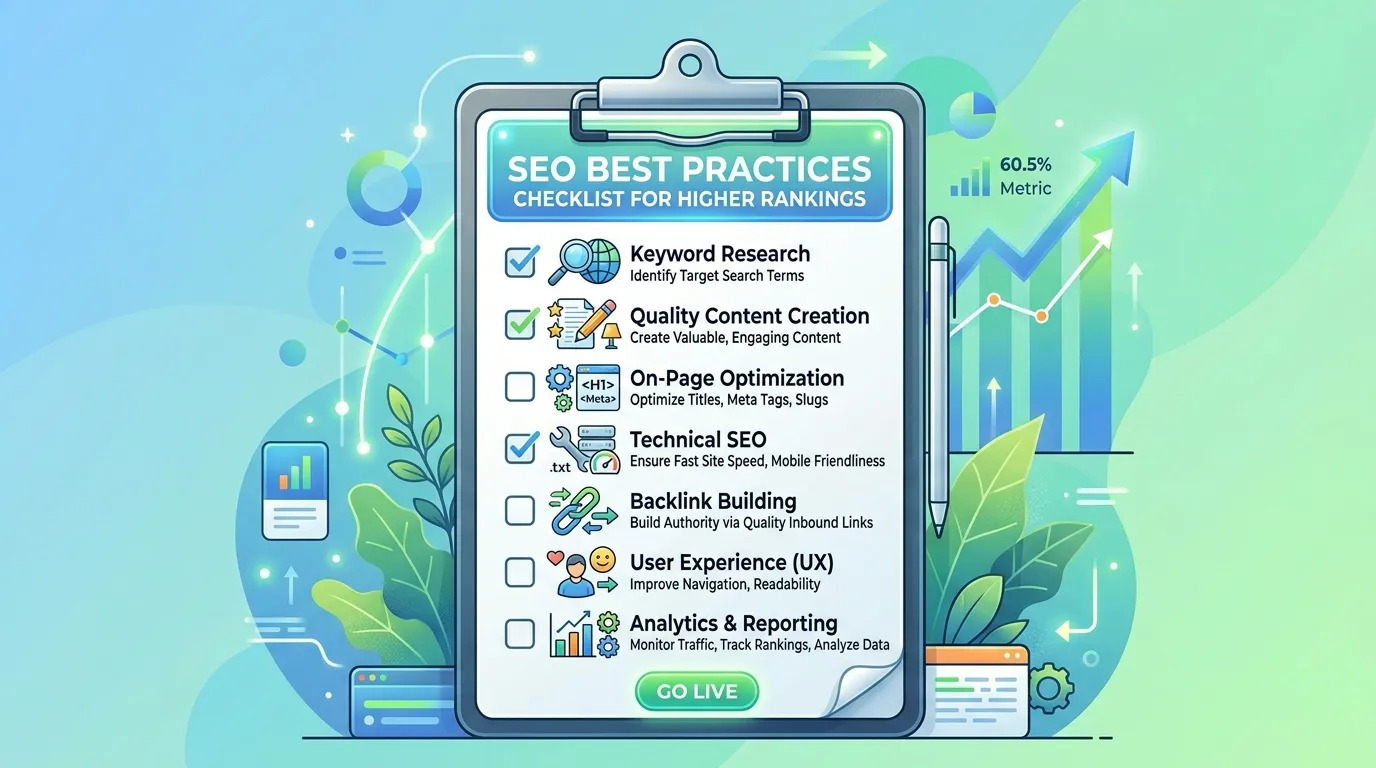
This SEO best practices checklist explains how to improve search engine ranking through on page SEO, technical SEO, content optimization, and backlinks. Learn practical strategies to boost website visibility, fix technical issues, increase traffic, and build long-term organic growth.
Search engines reward sites that load fast, answer questions clearly, and earn trust. If your pages do all three, you climb. If they miss the mark, you slide down the results and lose traffic to competitors who did the work.
This guide gives you a practical SEO best practices checklist you can apply right now. You’ll learn how to tighten your on page SEO, fix the technical SEO problems that quietly drag you down, and build the habits that improve search engine ranking over time.
Here’s the roadmap:
- What an SEO best practices checklist covers and why it matters
- On-page tactics that move rankings
- Technical SEO fixes that unlock crawling and speed
- Content, links, and tracking that sustain growth
Let’s get into it.
Why You Need an SEO Best Practices Checklist
SEO has dozens of moving parts. Without a system, important tasks slip through the cracks. One week you forget to add alt text, the next your sitemap breaks, and suddenly your traffic dips for reasons you can’t explain.
An SEO best practices checklist solves this. It turns a messy, abstract goal—”rank higher”—into a list of specific actions you can complete and verify. You stop guessing and start working through clear steps.
This matters because search engine ranking depends on consistency. Google’s systems reward sites that maintain quality across hundreds of pages, not sites that optimize one page and ignore the rest. A checklist keeps your standards even.
The Three Pillars of Modern SEO
Every solid SEO strategy rests on three pillars. Your checklist should touch all of them.
- On page SEO: The content and HTML elements on each page, including titles, headings, keywords, and internal links.
- Technical SEO: The backend factors that affect how search engines crawl, render, and index your site.
- Off-page SEO: The signals outside your site, mainly backlinks and brand mentions, that build authority.
When these three pillars work together, your SEO optimization efforts compound. Neglect one, and the other two struggle to deliver results.
Who This Checklist Is For
This guide works for business owners, marketers, and content creators who manage their own sites. You don’t need to be a developer. You just need a willingness to follow steps and check your work.
If you run an agency or handle SEO for clients, you can use this same SEO best practices checklist as a repeatable template. Apply it to every new site you take on.
Quick recap: A checklist replaces guesswork with structure, and it keeps your on page SEO, technical SEO, and off-page efforts in balance.
On Page SEO Best Practices Checklist
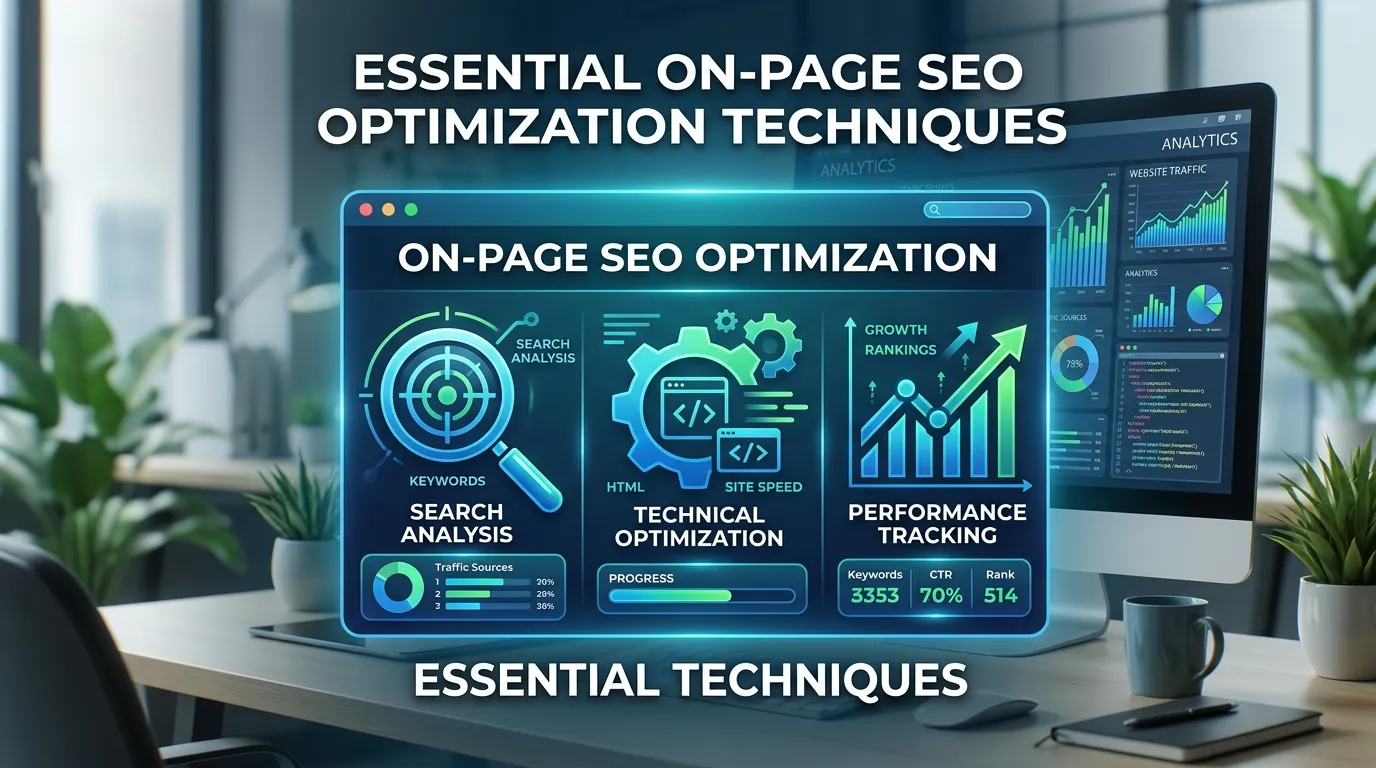
On page SEO is where most people start, and for good reason. You control every element, and small changes often produce quick wins. This section walks through each item your on page SEO best practices checklist should include.
Optimize Your Title Tags
Your title tag is the clickable headline in search results. It’s one of the strongest on-page ranking signals and your first chance to win a click.
Follow these rules:
- Keep titles under 60 characters so they don’t get cut off.
- Place your main keyword near the front.
- Write for humans, not just search engines—make people want to click.
- Give each page a unique title to avoid confusion.
A strong title balances SEO optimization with genuine appeal. If it reads like keyword soup, people scroll past it even when you rank well.
Write Compelling Meta Descriptions
Meta descriptions don’t directly affect search engine ranking, but they heavily influence click-through rate. A higher click-through rate sends positive signals to search engines over time.
Aim for 120 to 160 characters. Include your target keyword naturally and add a soft call to action. Tell readers exactly what they’ll get when they click.
Structure Content With Proper Headings
Headings organize your content for both readers and crawlers. They create a clear hierarchy that helps search engines understand your page.
Use this structure:
- H1: One per page, containing your primary keyword.
- H2: Major sections that break the topic into logical chunks.
- H3 and H4: Subsections that support each H2.
Never skip levels for styling reasons. A clean heading hierarchy is a core part of on page SEO and makes your content far easier to skim.
Use Keywords Naturally
Keyword usage has changed. Stuffing the same phrase 50 times no longer works—it actively hurts you. Modern SEO optimization rewards natural language and topical depth.
Place your focus keyword in:
- The title tag
- The H1 and at least one H2
- The first 100 words of your introduction
- The conclusion
- The URL slug
Then sprinkle related terms and synonyms throughout. This signals topical authority without tripping spam filters.
Optimize Images for Speed and Accessibility
Images make content engaging, but unoptimized files slow your pages and frustrate users. Every image needs attention.
Here’s your image checklist:
- Compress files to reduce load time.
- Use descriptive file names (not “IMG_4821.jpg”).
- Add alt text that describes the image and includes a keyword where it fits naturally.
- Use modern formats like WebP when possible.
Alt text serves two purposes. It helps visually impaired users understand your content, and it gives search engines context about your images.
Build a Strong Internal Linking Structure
Internal links pass authority between pages and help search engines discover your content. They also keep readers on your site longer.
Link from high-authority pages to pages you want to rank. Use descriptive anchor text that tells readers what they’ll find. Avoid generic phrases like “click here.”
Quick recap: On page SEO comes down to clear titles, smart keyword placement, clean headings, optimized images, and strong internal links.
Technical SEO Best Practices Checklist
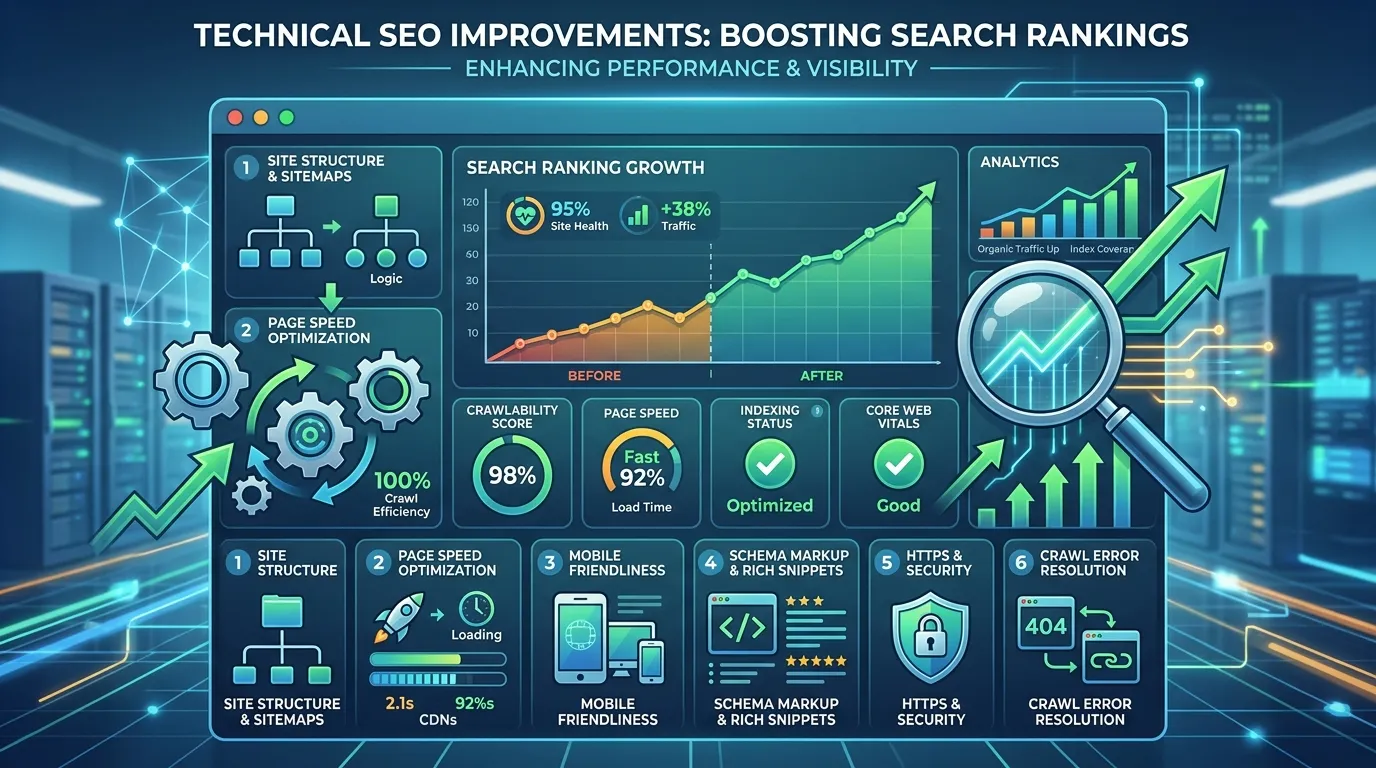
Technical SEO controls whether search engines can even access and understand your site. You can write perfect content, but if crawlers can’t reach it, you won’t rank. This section covers the technical foundation every site needs.
Make Your Site Crawlable and Indexable
Search engines use bots to crawl your pages. If those bots hit roadblocks, your content stays invisible.
Check these items:
- Submit an XML sitemap through Google Search Console.
- Review your robots.txt file to confirm you’re not blocking important pages.
- Fix crawl errors and broken links regularly.
- Use canonical tags to prevent duplicate content issues.
These steps form the backbone of technical SEO. Without them, your other efforts deliver weak returns.
Improve Page Speed and Core Web Vitals
Speed is a confirmed ranking factor, and Core Web Vitals measure the real experience users get on your pages. Slow sites lose visitors and rankings.
Focus on three metrics:
- Largest Contentful Paint (LCP): How fast the main content loads.
- Interaction to Next Paint (INP): How quickly your site responds to clicks.
- Cumulative Layout Shift (CLS): How stable the layout stays while loading.
To improve these, compress images, minimize code, use a content delivery network, and enable browser caching. Each fix nudges your search engine ranking upward.
Ensure Mobile-Friendliness
Google uses mobile-first indexing, which means it judges your site based on the mobile version. If your mobile experience is poor, your rankings suffer everywhere.
Test your site on real devices. Confirm that text is readable without zooming, buttons are easy to tap, and nothing overflows the screen. Responsive design solves most mobile problems at once.
Secure Your Site With HTTPS
HTTPS encrypts data between your site and visitors. It’s a ranking signal and a trust signal—browsers warn users away from sites without it.
Install an SSL certificate and confirm every page loads over HTTPS. Set up redirects from HTTP to HTTPS so you never serve an insecure version.
Add Structured Data Markup
Structured data helps search engines understand your content and can earn you rich results like star ratings, FAQs, and recipe cards. These enhancements grab attention in the results.
Use schema markup for the content types that fit your site—articles, products, reviews, events, or recipes. Test your markup with Google’s Rich Results Test to confirm it works.
Fixing Technical SEO Problems on Your Website
Technical issues pile up quietly. A broken redirect here, a slow image there, and soon your rankings stall. Working through them in order saves time and prevents new problems.
If you want a step-by-step walkthrough,
read this detailed guide.
It covers common errors and clear fixes Bookmark it for next technical audit.
Quick recap: Technical SEO makes your site fast, secure, mobile-ready, and easy for search engines to crawl and understand.
Content Best Practices for Better Search Engine Ranking

Content is what users actually read, and it’s what earns links and shares. Great content sits at the center of every successful SEO best practices checklist. This section covers how to create content that ranks and converts.
Match Search Intent
Every search has an intent behind it. Some users want information, others want to buy, and some want to navigate to a specific site. Your content must match the intent behind your target keyword.
Before you write, search your keyword and study the top results. If they’re all how-to guides, a sales page won’t rank. Give searchers the format they expect, then make yours better.
Create Comprehensive, Original Content
Thin content rarely ranks. Search engines favor pages that cover a topic thoroughly and answer related questions. Depth signals expertise.
This doesn’t mean padding your content with fluff. It means answering the full question your reader has, including the follow-up questions they’ll think of next. Comprehensive content keeps people on the page and reduces their need to click back to search.
Use a Mix of Formats
People consume content in different ways. Breaking up text with other elements improves engagement and time on page.
Mix in:
- Short paragraphs that deliver one idea each
- Bullet points for steps and lists
- Tables for comparisons
- Images and diagrams that explain complex points
This variety supports SEO optimization by keeping readers engaged, which sends positive behavioral signals to search engines.
Keep Content Fresh
Outdated content loses rankings over time. Search engines favor pages that reflect current information, especially for topics that change often.
Review your top pages every few months. Update statistics, refresh examples, and add new sections when the topic evolves. A regular content audit belongs on every SEO best practices checklist.
Off-Page SEO and Authority Building
Off-page SEO covers the signals beyond your own site. Mainly, this means backlinks—links from other sites pointing to yours. They act as votes of confidence that boost your search engine ranking.
Earn High-Quality Backlinks
Not all links are equal. One link from a respected, relevant site beats dozens of links from spammy directories. Quality and relevance matter more than raw numbers.
Earn good links by:
- Creating content worth citing, like original research or detailed guides
- Writing guest posts for reputable sites in your niche
- Building genuine relationships with others in your industry
- Reclaiming unlinked brand mentions
Avoid buying links or joining link schemes. These tactics risk penalties that can wipe out your search engine ranking overnight.
Build Brand Signals
Search engines increasingly value brand reputation. Mentions of your brand, even without links, contribute to your authority over time.
Stay active where your audience spends time. Maintain consistent business information across directories, encourage genuine reviews, and engage on social platforms. These signals reinforce your credibility.
SEO Checklist Comparison Table
The table below summarizes the core areas of your SEO best practices checklist, the key tasks in each, and how often you should review them.
|
SEO Area |
Key Tasks |
Priority |
Review Frequency |
|---|---|---|---|
|
On Page SEO |
Title tags, meta descriptions, headings, keyword placement, alt text |
High |
Per page / monthly |
|
Technical SEO |
Crawlability, page speed, mobile-friendliness, HTTPS, schema |
High |
Monthly / quarterly |
|
Content |
Search intent, depth, freshness, formatting |
High |
Quarterly |
|
Off-Page SEO |
Backlinks, brand mentions, reviews |
Medium |
Ongoing |
|
Tracking |
Rankings, traffic, conversions, Search Console errors |
Medium |
Weekly / monthly |
Use this table as a quick reference. It keeps your efforts organized and ensures you don’t neglect any single area.
Common SEO Mistakes to Avoid
Even with a solid SEO best practices checklist, mistakes happen. Knowing the common ones helps you avoid them. These errors quietly damage your search engine ranking.
Keyword Stuffing
Cramming keywords into every sentence makes content unreadable and triggers spam filters. Modern SEO optimization rewards natural writing. Use your keyword where it fits and trust related terms to carry the rest.
Ignoring Mobile Users
Designing only for desktop ignores most of your traffic. Since Google uses mobile-first indexing, a poor mobile experience hurts every device’s rankings. Always test on real phones.
Neglecting Technical SEO
Many site owners focus only on content and ignore the backend. But broken links, slow pages, and crawl errors cap your potential. Technical SEO unlocks the value of your content.
Chasing Vanity Metrics
Traffic feels good, but it doesn’t pay the bills. Track conversions, not just visits. A page with modest traffic and high conversions beats a viral page that converts no one.
Expecting Instant Results
SEO is a long game. Rankings take weeks or months to build, especially in competitive niches. People who quit after two weeks miss the payoff. Stay consistent and trust the process.
Quick recap: Avoid keyword stuffing, mobile neglect, technical blind spots, vanity metrics, and impatience.
How to Track Your SEO Progress
You can’t improve what you don’t measure. Tracking turns your SEO best practices checklist into a feedback loop. You see what works, double down, and cut what doesn’t.
Essential SEO Tools
A few core tools cover most of your tracking needs:
- Google Search Console: Tracks rankings, clicks, crawl errors, and indexing issues for free.
- Google Analytics: Measures traffic, behavior, and conversions.
- Keyword research tools: Help you find opportunities and track keyword positions.
- Site audit tools: Scan for technical SEO problems automatically.
You don’t need every premium tool to start. Search Console and Analytics give you a strong foundation at no cost.
Metrics That Actually Matter
Focus on metrics tied to business goals. Track these regularly:
- Organic traffic trends over time
- Keyword rankings for your target terms
- Click-through rate from search results
- Conversions from organic visitors
- Core Web Vitals and crawl health
Review these on a set schedule. Monthly works for most sites, though competitive niches benefit from weekly checks.
Putting Your SEO Checklist Into Action
Knowledge without action changes nothing. The best SEO best practices checklist in the world is useless if it sits unread. Here’s how to turn this guide into results.
Start with a baseline audit. Run your site through Search Console and a site audit tool to find the biggest problems. Fix the critical technical SEO issues first, since they block everything else.
Next, work through your on page SEO one page at a time. Optimize titles, headings, and images. Then turn to content—update old posts and create new ones that match search intent.
Finally, build authority over time through quality content and genuine relationships. Track your progress monthly and adjust based on what the data tells you. SEO optimization is never finished; it’s a habit you build.
Frequently Asked Questions
What is an SEO best practices checklist?
An SEO best practices checklist is a structured list of tasks that improve your site’s visibility in search results. It covers on page SEO, technical SEO, content, and off-page factors. Following it keeps your optimization consistent across every page. Think of it as a repeatable system rather than a one-time fix.
How long does it take to see SEO results?
Most sites see meaningful results in three to six months, though timelines vary. New sites and competitive niches take longer than established sites in low-competition spaces. Technical fixes sometimes show quick gains, while content and link building build slowly. Patience and consistency matter more than speed.
What is the difference between on page SEO and technical SEO?
On page SEO covers the content and HTML elements you control on each page, like titles, headings, and keywords. Technical SEO covers backend factors such as crawlability, page speed, and security. On page SEO helps search engines understand your content, while technical SEO helps them access it. Both are essential for strong search engine ranking.
How many keywords should I target per page?
Focus on one primary keyword per page, supported by a handful of related terms. Targeting too many keywords on one page dilutes your relevance and confuses search engines. It’s better to create separate pages for distinct topics. This approach keeps your SEO optimization focused and easier to track.
Does page speed really affect search engine ranking?
Yes, page speed is a confirmed ranking factor and a key part of technical SEO. Slow pages frustrate users, increase bounce rates, and signal poor quality to search engines. Core Web Vitals measure the real loading experience visitors get. Improving speed often delivers a measurable bump in rankings and conversions.
How often should I update my content?
Review your most important pages every three to six months. Update statistics, refresh examples, and add new sections when the topic evolves. Search engines favor fresh, accurate content, especially for fast-changing subjects. Regular updates protect rankings you’ve already earned and often improve them.
Is keyword density still important for SEO?
Keyword density matters far less than it used to. Stuffing keywords now hurts rankings and reads poorly to humans. Instead, use your focus keyword naturally and support it with related terms and synonyms. Prioritize clear, comprehensive writing over hitting a specific percentage.
What are backlinks and why do they matter?
Backlinks are links from other websites pointing to your pages. They act as votes of confidence that boost your authority and search engine ranking. Quality and relevance matter far more than quantity. A single link from a respected, related site outweighs dozens of low-quality links.
Do I need technical knowledge to do SEO?
You don’t need to be a developer to handle most SEO tasks. On page SEO and content work require no coding at all. Some technical SEO fixes may need developer help, but many tools simplify the process. Following a clear SEO best practices checklist makes the work manageable for beginners.
How do I fix technical SEO issues on my website?
Start with a site audit to identify crawl errors, broken links, slow pages, and indexing problems. Fix critical issues first, then work through smaller ones in order. Tools like Google Search Console highlight the most pressing errors. Working through a structured guide helps you resolve problems without missing steps.
What tools do I need to start with SEO?
You can begin with two free tools: Google Search Console and Google Analytics. Search Console tracks rankings, crawl health, and indexing, while Analytics measures traffic and conversions. As you grow, add keyword research and site audit tools for deeper insight. Start simple and expand only as your needs increase.
Should I focus on on page SEO or off-page SEO first?
Start with on page SEO and technical SEO, since you control these completely. A solid on-page foundation makes your content rank-worthy before you chase links. Off-page SEO, like backlink building, works best once your pages already deliver value. Build the foundation first, then earn authority over time.
Final Thoughts
SEO success comes from doing the fundamentals well and repeating them. This SEO best practices checklist gives you a clear path—optimize your on page SEO, fix your technical SEO, create content that matches intent, and build authority steadily.
The biggest mistake is treating SEO as a one-time project. Search engines, competitors, and user expectations all change. Your strategy has to keep pace.
Your next step is simple: run a baseline audit, fix your most critical technical issues, and start working through this checklist one item at a time. Small, consistent improvements compound into lasting gains in search engine ranking. Start today, stay steady, and the results will follow.
