
This blog explains the importance of balancing on-page and off-page SEO to improve search visibility, covering keyword optimization, technical performance, backlink building, AI-driven search trends, and authority-building strategies that drive sustainable organic traffic and long-term digital growth.
Search engine optimization is the foundation of digital visibility. When users search for solutions, products, or information, search engines use complex algorithms to deliver the most relevant, trustworthy results. If a website fails to meet the criteria set by these algorithms, it simply will not appear in front of potential customers. Achieving high search visibility requires a comprehensive approach that signals both relevance to the user’s query and authority within the broader digital ecosystem.
This comprehensive approach relies heavily on mastering on-page and off-page SEO. Think of your website as a physical retail store. On-page elements represent everything you do inside the store to make the shopping experience exceptional. This includes organizing the aisles, putting up clear signage, maintaining a clean environment, and offering high-quality products. Off-page elements represent the word-of-mouth recommendations, the billboard down the highway, and the positive reviews in the local newspaper that convince people to visit your store in the first place. Understanding how to balance and implement on-page and off-page SEO is crucial for long-term online success.
The Core Pillars of Digital Visibility
To compete in today’s crowded digital marketplace, you need a well-integrated approach to both on-page and off-page SEO. Each discipline targets different ranking factors, and together, they create a powerful synergy for your site’s online presence. On-page SEO ensures your site is polished, fast, and offers maximum relevance to users and algorithms alike. Off-page SEO focuses on establishing your domain’s trust and credibility—because even the best-designed web page won’t rank without the backing of strong, reputable external signals.
Focusing solely on technical website elements while ignoring external reputation leaves a website isolated. Conversely, building massive external hype for a slow, poorly structured website results in high bounce rates and lost conversions. We must explore the critical components of both on-page and off-page SEO, detailing how to execute them effectively to drive sustainable, high-quality organic traffic.
What Makes On-Page and Off-Page SEO Different?
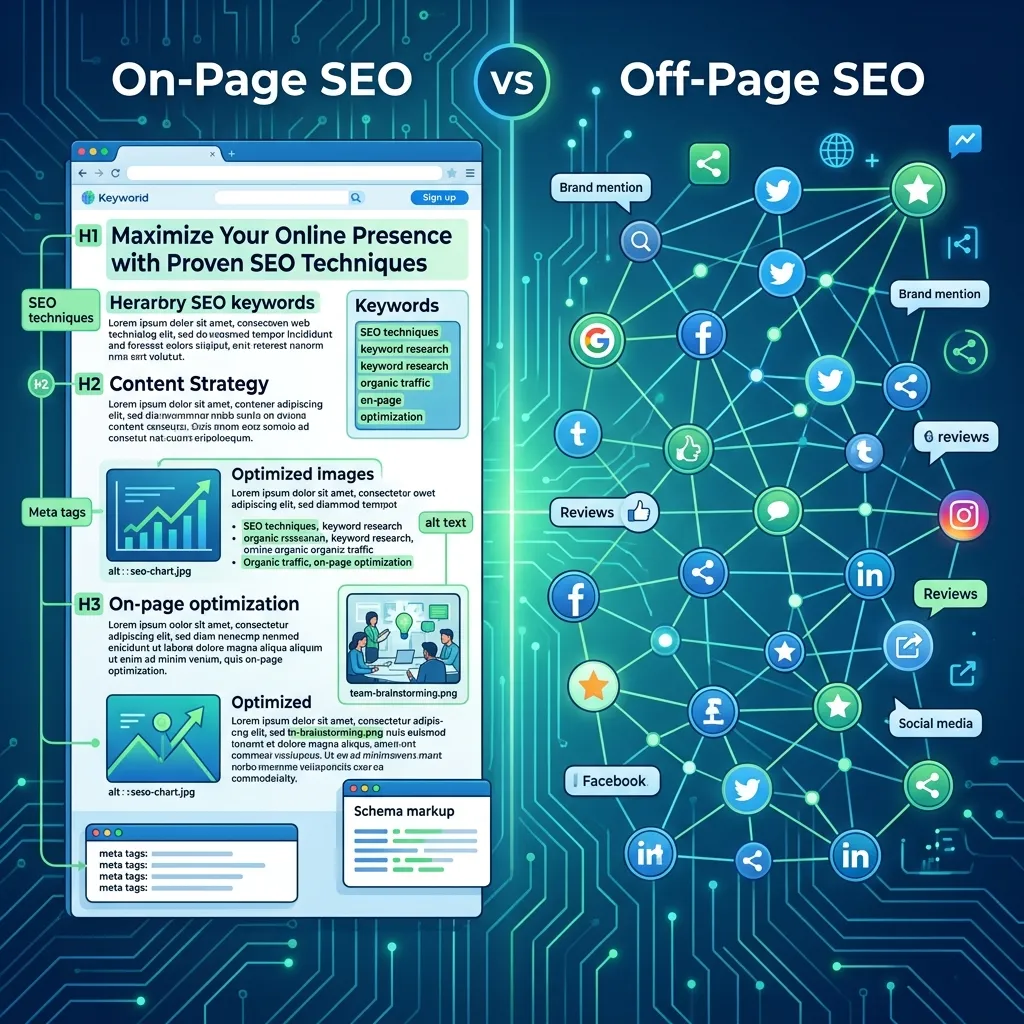
On-page and off-page SEO represent two halves of the same digital marketing coin. You cannot succeed with one while completely neglecting the other. Search algorithms evaluate hundreds of different signals to determine where a page should rank. They look at the text on your page to understand what it is about, and they look at external links to understand how trusted that information is.
What’s unique about on-page SEO is the level of control you possess—it’s about meticulously shaping every aspect of your content, from text and code to internal navigation. Off-page SEO, however, is more about influence—cultivating relationships with influencers, editors, and niche communities to spread the word and earn authoritative references.
When you integrate on-page and off-page SEO into your daily workflow, you create a holistic growth engine. You optimize the code and content for crawlers while simultaneously building relationships with other webmasters to earn valuable backlinks.
Critical On-Page SEO Components
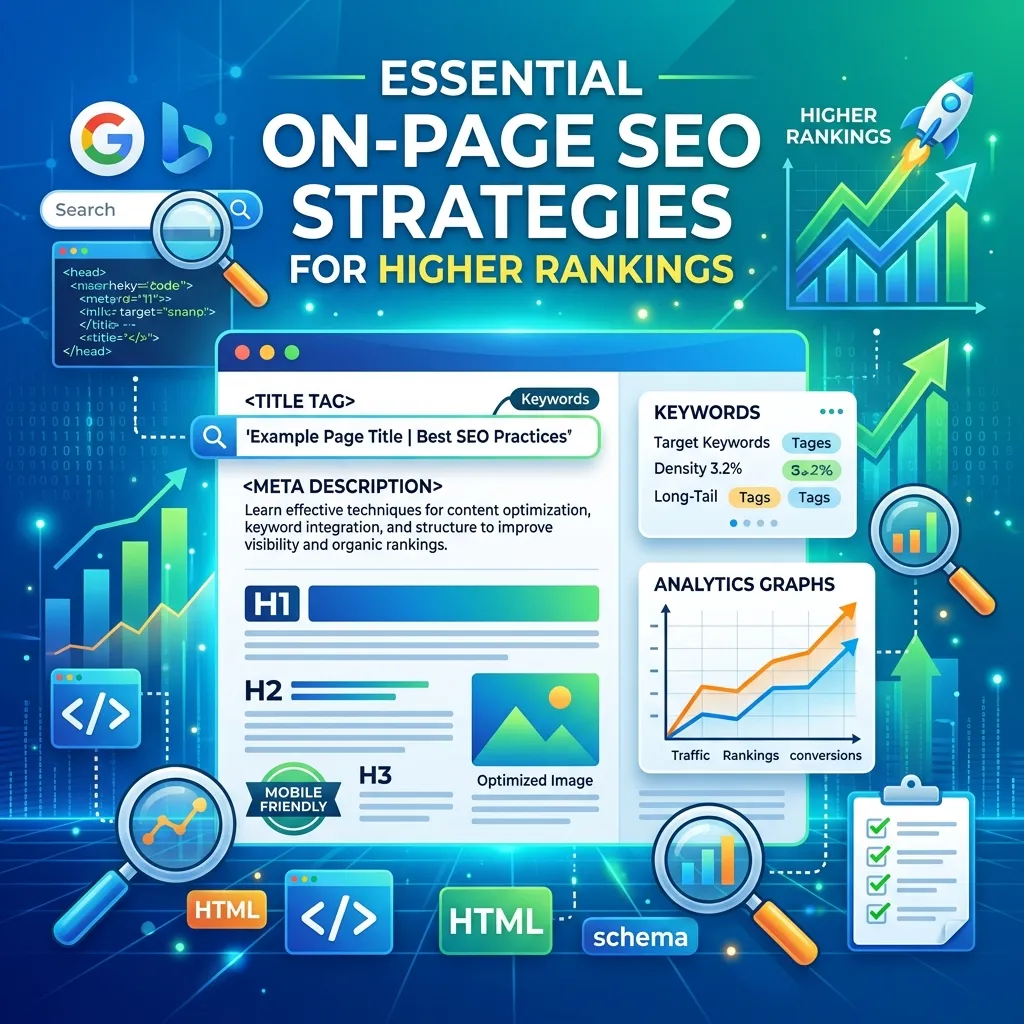
On-page SEO refers to the practice of optimizing individual web pages so they rank higher and earn more relevant traffic. This discipline encompasses both the content visible to users and the HTML source code visible to search engine bots. A strong foundation in on-page and off-page SEO always begins with your own site.
Optimizing Keyword Placement
Thorough keyword research dictates the direction of your content. Identify the exact terms and phrases your target audience uses to find information. Once you select primary keywords, incorporate Latent Semantic Indexing (LSI) keywords. LSI keywords are conceptually related terms that help search engines understand the broader context of the page. Place primary keywords naturally in the page title, the first paragraph, and throughout the text, but prioritize natural readability over forced repetition. Excellent keyword optimization bridges the gap between user intent and your content.
Sectioning Content with Clarity
A masterful use of keywords isn’t just about stuffing them into paragraphs. Consider how your keywords flow within headings, subheadings, and even your lists or tables. Google increasingly rewards pages where keywords are supported by rich context—think synonyms, related phrases, and natural usage in lists and FAQs. Always tie your on-page content back to the broader topic so that the page demonstrates depth and comprehensive coverage.
Title Tags and Meta Descriptions
The title tag and meta description are the first elements a user sees on the search engine results page. An optimized title tag directly impacts your ranking, while a compelling meta description improves your click-through rate. Write title tags under 60 characters to prevent truncation, and craft meta descriptions under 155 characters that offer a clear value proposition and a call to action.
Writing for Both Bots and Humans
Your meta information should include main and secondary keywords, but also be inviting and actionable for readers. Test different CTAs in your meta descriptions to see what brings higher CTRs. Don’t forget that unique titles and descriptions for every page prevent cannibalization and help Google deliver the most appropriate result to users.
Header Tags and Content Structure
Header tags (H1, H2, H3) create a hierarchical structure that benefits both human readers and search engine crawlers. The H1 tag serves as the main headline and should clearly state the page’s topic. Use H2 tags to divide the content into major sections, and H3 tags for specific sub-points. This logical structure makes the text easily scannable and helps algorithms interpret the relationship between different concepts.
Accessibility and UX
Properly structured content isn’t just about SEO—it’s about accessibility and user satisfaction. Use clear subheadings for main concepts, bullet points for summarizing key insights, and consistent formatting for tables and lists. A logical structure keeps user bounce rates low and increases time on site, both of which positively impact your SEO.
Site Speed and Technical Performance
Page speed is a direct ranking factor. Users expect websites to load almost instantly; a delay of even a few seconds significantly increases the bounce rate. Improve site speed by enabling browser caching, minimizing HTTP requests, and minifying CSS, JavaScript, and HTML files. Fast-loading pages keep users engaged and encourage them to explore more content on the domain.
A slow-loading site not only frustrates your visitors but also reduces your crawl frequency in search engines, which can delay the indexing of new content. Use PageSpeed Insights or similar tools to monitor and improve performance. Regularly update your software and keep plugins to a minimum for best results.
To understand how site speed fits into the larger picture, review comprehensive data on algorithms. Check out this detailed breakdown of Google ranking factors to see how technical elements influence visibility.
Mobile Friendliness and Responsiveness
In an age where mobile traffic often surpasses desktop, ensuring your site displays perfectly on all devices is mandatory. Google’s mobile-first indexing means your mobile experience is the standard for ranking. Check font sizes, button spacing, and navigation layouts for easy tap access without zooming or horizontal scrolling.
Structured Data and Schema Markup
Implement schema markup to enhance your site’s listing in the SERPs with rich snippets (stars, dates, reviews). Marking up your content helps search engines clarify exactly what your information means, laying the groundwork for voice and AI-driven queries.
Image Optimization and Accessibility
Use compressed yet high-resolution images with descriptive, keyword-rich alt text attributes. Images should supplement the text, break up long paragraphs, and be relevant to the content. Descriptive file names and adding image sitemaps can further improve indexation and visibility in Google Images.
Internal Linking Strategies
Smart internal linking distributes link equity (authority) throughout your site and helps search crawlers discover new or deep content. Link to related assets, cornerstone articles, and important service pages using descriptive anchor text. Avoid over-optimization—ensure every link is useful to the reader.
High-Quality Off-Page SEO Strategies
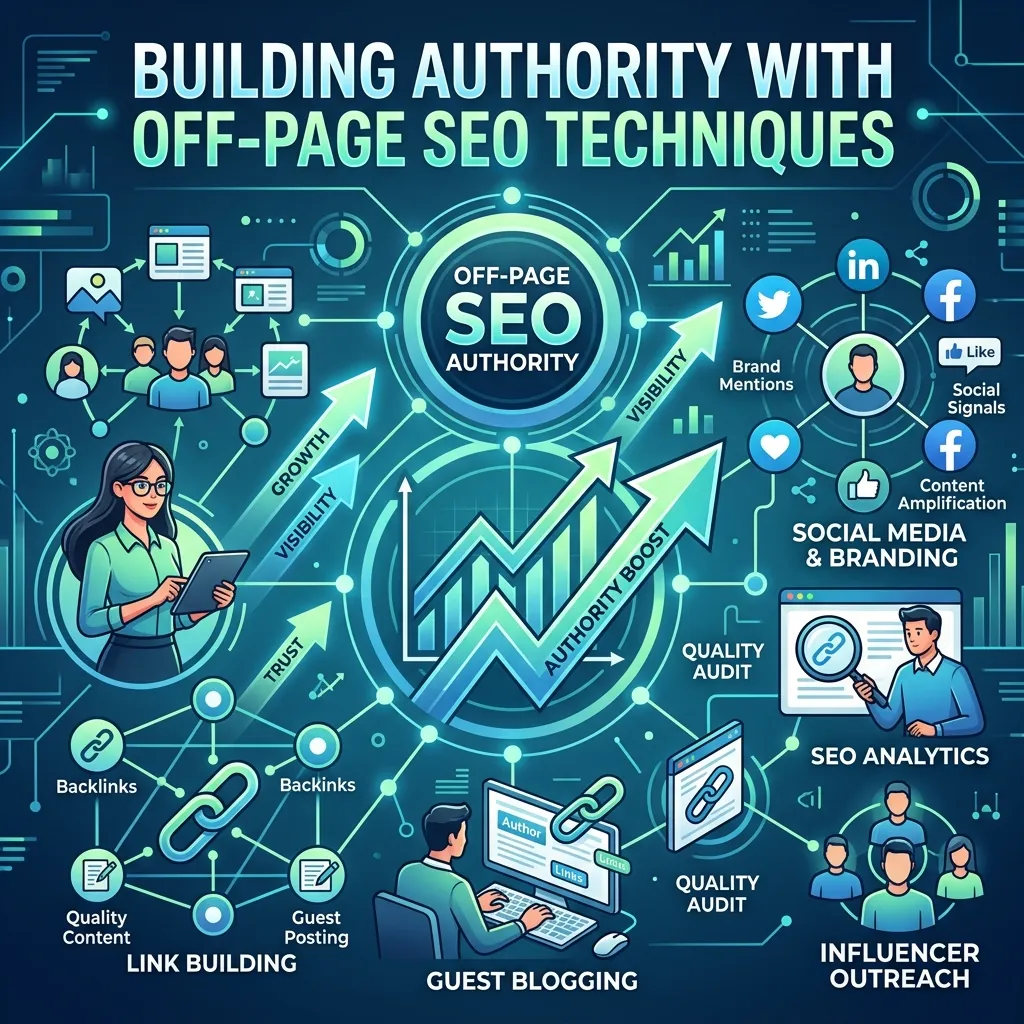
Off-page SEO involves actions taken outside of your own website to impact your rankings within search engine results pages. These external signals demonstrate the website’s popularity, relevance, trustworthiness, and authority. Combining on-page and off-page SEO guarantees you cover all algorithm requirements.
High-Quality Backlink Building
Backlinks, or inbound links from other websites, remain one of the strongest ranking signals. Search engines view a backlink as a vote of confidence. However, focus strictly on quality over quantity. A single backlink from a highly authoritative domain holds more weight than hundreds of links from low-quality directories.
- Guest Blogging: Write high-value articles for reputable publications in your industry to earn natural links.
- Broken Link Building: Find broken links on external websites and suggest your own active page as a replacement.
- Competitor Analysis: Identify where your competitors get their backlinks and target those same domains.
- The Skyscraper Technique: Build the best resource on a topic, then reach out to everyone linking to similar but inferior content.
- Local Citations: Ensure your business is listed in relevant local directories, which also aids local SEO and credibility.
Build relationships with journalists, editors, and influencers—not just to get links, but to secure mentions and ongoing collaboration opportunities. A healthy backlink profile is diverse, with links from blogs, news outlets, directories, and industry leaders.
Social Signals and Brand Visibility
While Google has stated that social media shares are not a direct ranking metric, social signals heavily influence digital visibility. High engagement on platforms drives direct referral traffic to your website. Increased traffic leads to broader content distribution, which naturally increases the likelihood of earning organic backlinks. Effective on-page and off-page SEO relies heavily on content distribution.
- Content Promotion: Regularly share your most valuable content on Twitter, LinkedIn, Facebook, and niche community groups.
- Encourage Sharing: Include share buttons and calls to action on all content.
- Video Content: Platforms like YouTube serve as powerful secondary discovery engines, and their links and embeds generate indirect signals.
The more frequently your brand is discussed and engaged with, the greater its perceived relevance and trust in search algorithms—a sign of strong off-page SEO.
Leveraging Unlinked Brand Mentions
Sometimes publications or bloggers will mention your company name without providing a hyperlink to your website. These unlinked brand mentions still build brand awareness, but they miss an SEO opportunity. Use monitoring tools to track these mentions. When you find one, politely email the author requesting they turn the mention into a clickable link.
Monitor for both your exact brand name and common misspellings to catch more opportunities for easy wins.
Influencer Collaboration and Outreach
Engage industry influencers who have the ear of your target audience. Guest appearances, podcasts, co-hosted webinars, and joint research are excellent for gaining strong links and expanding your reach. Influencer marketing is also a key driver for new followers and social engagement, which in turn attracts attention from other webmasters and publishers.
Online Reviews and Reputation Management
Encourage satisfied customers to leave reviews on platforms like Google, Trustpilot, and relevant industry directories. Positive reviews influence both local and organic SEO by increasing trust signals associated with your domain, and negative reviews provide a chance to publicly demonstrate excellent customer service.
The Impact of AI on Search Optimization
The SEO landscape shifts constantly as search engines refine their algorithms to better serve user intent. Staying ahead with on-page and off-page SEO requires understanding several emerging technological trends.
Natural Language Processing and AI

Search engines increasingly rely on artificial intelligence algorithms. These systems understand the nuanced context of human language better than ever before. Rather than matching exact keywords, AI algorithms evaluate the overall semantic meaning of a query to deliver highly specific answers. Your on-page and off-page SEO efforts must adapt to conversational, long-tail queries.
AI tools also provide marketers with automated site audits, content creation suggestions, and backlink analysis at scale—making it easier to optimize regularly and spot gaps or new ranking opportunities.
Optimizing for Voice Search and AI Summaries
As smart speakers and mobile voice assistants proliferate, search queries are becoming longer and more conversational. Websites must optimize for these natural language queries by providing direct, concise answers within their content. Both on-page and off-page SEO strategies now require a deep focus on structured data and clear, authoritative formatting to satisfy AI-driven answer engines.
Optimize FAQ sections and use schema to mark up Q&A and answer-rich content. This puts your site in a better position to be picked up as a voice answer or AI summary in search results.
E-E-A-T and Trust Signals
Experience, Expertise, Authoritativeness, and Trustworthiness (E-E-A-T) are core principles in Google’s quality algorithm. Satisfying these principles requires not only expert, original authored content, but also a robust off-page reputation (third-party reviews, links, and press signals). Feature author bios, cite sources, and list real world proof and credentials for best results.
Comparing the Two Strategies
To truly master on-page and off-page SEO, you must understand how their specific tactics compare and complement one another.
|
Feature |
On-Page SEO |
Off-Page SEO |
|---|---|---|
|
Primary Goal |
Optimize internal content and site structure |
Build external authority and domain trust |
|
Key Elements |
Keywords, title tags, site speed, internal links |
Backlinks, social signals, brand mentions |
|
Control Level |
Full control over implementation |
Partial control (relies on third parties) |
|
User Impact |
Direct impact on user experience and reading |
Indirect impact via referral traffic and trust |
|
Time to Results |
Faster initial indexing and relevance scoring |
Longer-term authority-building process |
Frequently Asked Questions
What is the exact difference between on-page and off-page SEO?
On-page SEO involves optimizing elements directly on your website, such as content formatting, keywords, technical speed, and user experience. Off-page SEO refers to external actions taken outside your domain, like acquiring backlinks, nurturing social mentions, and building partnerships. Together, on-page and off-page SEO build a complete profile of relevance, quality, and authority in the eyes of search algorithms.
How do I balance on-page and off-page SEO?
You should prioritize your on-page elements first to ensure your site is fast, readable, and highly relevant for your audience and target keywords. Once your content is high-quality and technically secure, shift resources to off-page tactics like outreach, link building, influencer marketing, and PR campaigns. Maintaining a continuous cycle of both on-page and off-page SEO ensures steady, compounding organic growth.
Why is site speed considered an on-page SEO factor?
Site speed is an on-page factor because you control the servers, code structure, image sizes, and delivery. Search engines penalize slow websites because these produce frustrating user experiences. Optimizing your speed is a foundational first step in technical on-page SEO—faster websites rank and convert better.
What makes a backlink high-quality for off-page SEO?
A high-quality backlink comes from an authoritative, trusted website that operates within a relevant industry or niche. It should be a natural editorial reference embedded in valuable content—not in spammy comment sections or mass directory lists. Context, authority, anchor text, and placement all influence link value.
How often should I update my on-page and off-page SEO strategy?
You should audit your on-page content every six months, looking for outdated statistics, shifting keyword trends, or broken internal links. Your off-page strategy requires weekly or monthly outreach to consistently build new relationships and secure fresh backlinks. SEO is a living process requiring regular attention and evolution, not a one-time checklist.
Do social media signals directly improve my search rankings?
Google and other search engines officially state that social media likes and shares are not direct ranking factors. However, strong social signals drive significant referral traffic, expand visibility, and increase the chances your content will be noticed by journalists, editors, and webmasters—leading to powerful organic backlinks that do move the rankings needle.
What is the role of keyword density in modern on-page SEO?
Keyword density is far less important today than overall semantic relevance, topical expertise, and user intent fulfillment. Place main and secondary keywords naturally in headers, intros, and logical spots, but never sacrifice readability. Use supporting terms, synonyms, and related questions to build depth without stuffing.
Can I rank my website using only on-page SEO techniques?
It is possible to rank for very obscure or “long-tail” low-competition keywords with superb on-page SEO. Competitive keywords, however, require strong external signals through backlinks and brand mentions. For top rankings and sustainable traffic, balance both on-page and off-page SEO for a complete approach.
How does AI impact traditional on-page and off-page SEO?
AI forces marketers to optimize for conversational search and direct, actionable answers. It prioritizes content that is both authoritative on-page and supported by credible third-party signals off-page. AI tools also speed up technical audits and identify new ranking opportunities, emphasizing the need for regular strategy updates.
How long does it take to see traffic from on-page and off-page SEO?
Optimizing your on-page elements—such as speed, structure, and new keywords—can sometimes yield ranking improvements within weeks once crawled and indexed by search engines. Off-page efforts, like building a robust backlink profile or press coverage, typically take three to six months to show significant organic growth. The combined effect is cumulative, so patience and persistence pay off.
By combining and continually refining both on-page and off-page SEO strategies, you future-proof your website against algorithm shifts and new competitive threats. Whether you’re just getting started or refining advanced tactics, treat on-page and off-page SEO as an ongoing partnership—your roadmap to sustainable, high-quality organic traffic and enduring digital authority.
