

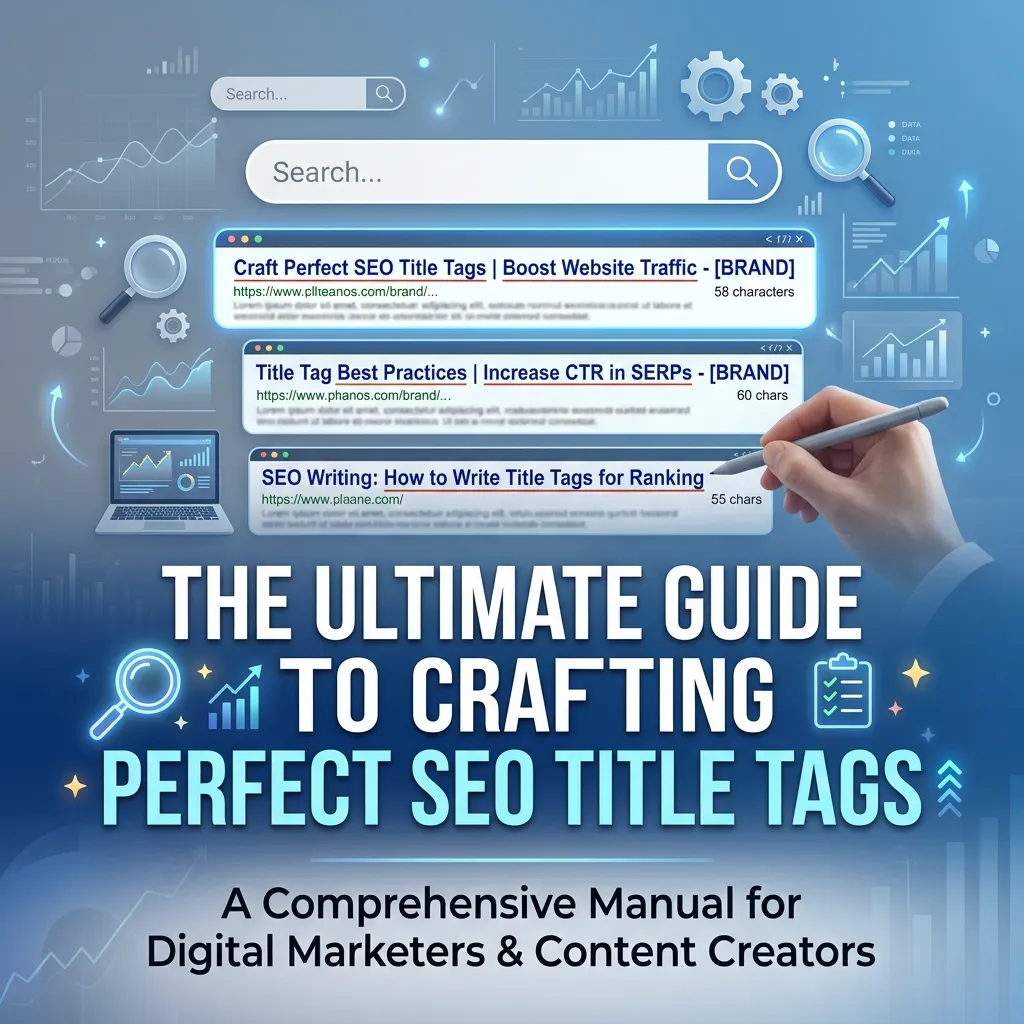
This blog explains how SEO title tags improve search rankings, click-through rates, and organic traffic. It covers keyword placement, title optimization strategies, common mistakes, emotional triggers, search intent alignment, and advanced techniques for better SEO performance.
You have spent hours writing a highly informative, deeply researched article. You hit publish, sit back, and wait for the organic traffic to roll in. But days turn into weeks, and your page views remain stagnant. The culprit might not be your content at all. Instead, it could be the very first thing search engines and users see: your seo title tag.
An seo title tag is an HTML element that specifies the exact title of a web page. It appears as the clickable blue link on search engine results pages, at the top of web browser tabs, and when you share a link on social media networks. Despite being one of the oldest ranking factors, the seo title tag remains incredibly powerful. A well-optimized seo title tag acts as a prominent billboard for your content, signaling to Google what your page is about while simultaneously convincing real human beings to click.
The relationship between your seo title tag and click-through rates cannot be overstated. Search engines use click-through rates as a primary metric to determine if users find a result valuable. If your seo title tag is boring, truncated, or irrelevant, searchers will simply scroll past it. This clearly signals to search algorithms that your page might not be the best answer to the query, potentially dragging down your rankings. On the flip side, a compelling, optimized seo title tag boosts your click-through rate, driving more traffic and reinforcing your position in search results.
Anatomy of an Effective SEO Title Tag
Crafting the perfect seo title tag requires a careful balance of technical constraints and human psychology. Understanding the core components of an seo title tag helps you write ones that both search engines and users love.
Keyword Integration
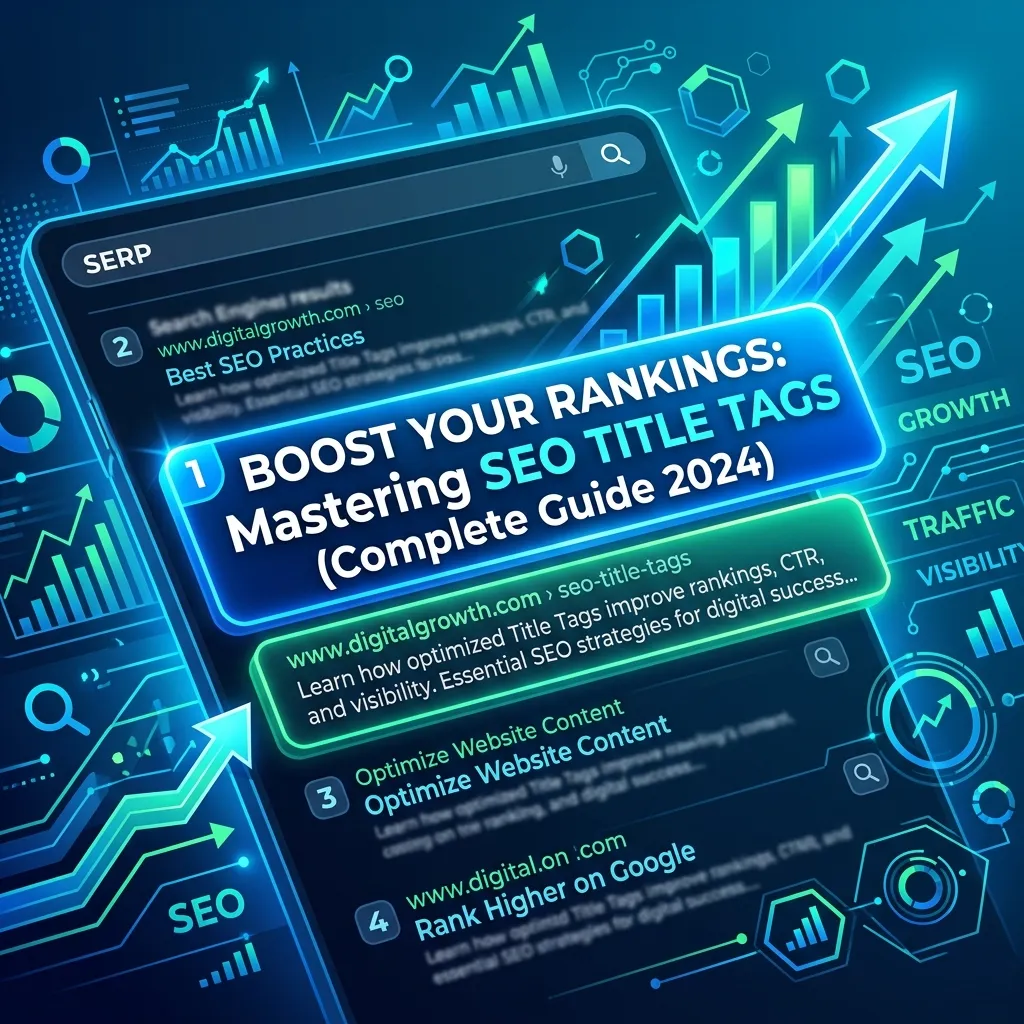
Keywords remain the absolute foundation of any search strategy. When users type a query into a search engine, the algorithm rapidly scans for matching or semantically related terms within your seo title tag.
Primary and Secondary Keywords
Your seo title tag should always feature your primary keyword. This represents the main topic of your page and the primary term you want to rank for. If space permits, you can also include a secondary keyword or a related variation. For example, if your primary keyword is “vintage coffee tables,” a secondary keyword might be “retro living room furniture.”
Natural Language vs. Keyword Stuffing
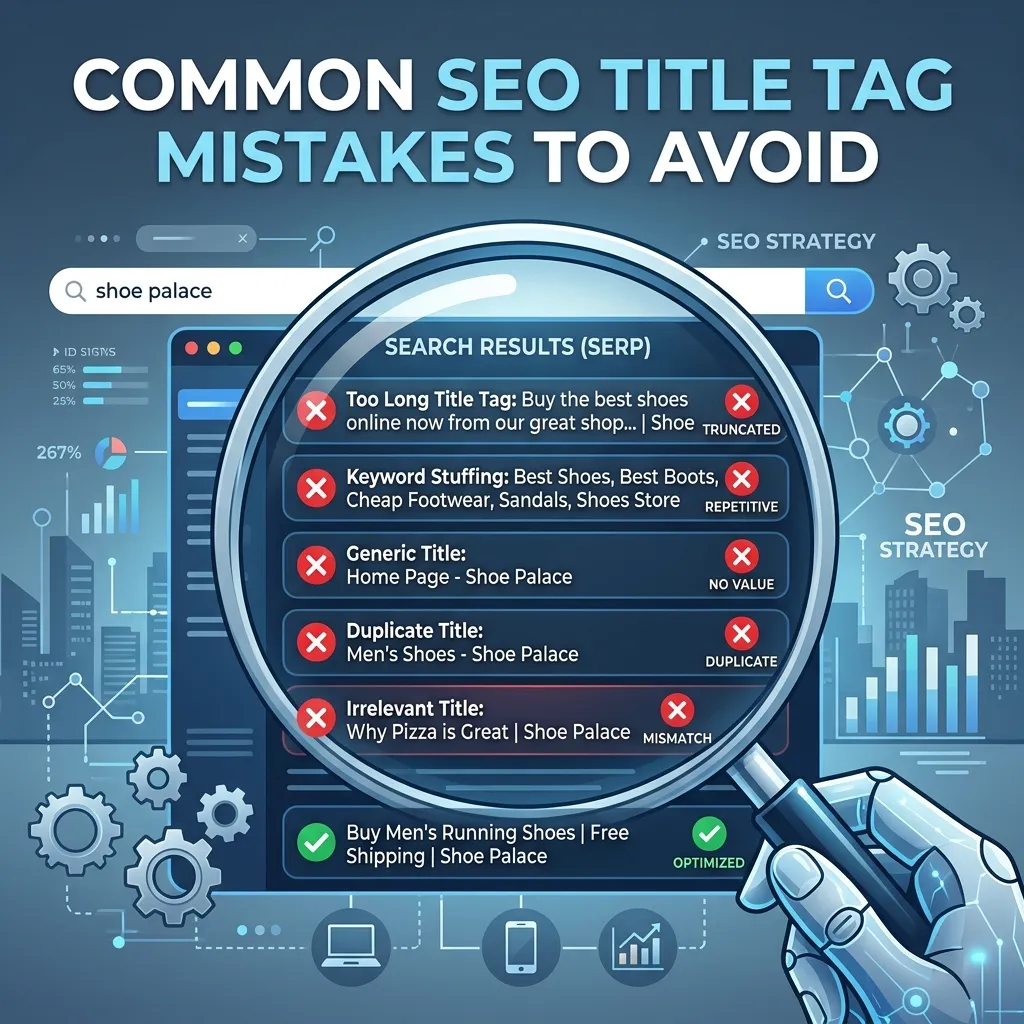
Search engines are sophisticated enough to understand natural language. A title like “Vintage Coffee Tables | Buy Retro Living Room Furniture” reads exceptionally well. Conversely, “Vintage Coffee Tables, Retro Coffee Tables, Buy Coffee Tables” is a textbook example of keyword stuffing. This aggressive tactic hurts readability, deters users from clicking your seo title tag, and triggers search engine penalties.
Length and Pixel Width Considerations
Search engines provide limited digital space to display your seo title tag. If your title is too long, it gets cut off, ending with an ellipsis. This truncation hides important information and makes your result look unprofessional.
As a general rule of thumb, aim to keep your seo title tag between 50 and 60 characters. This length is usually safe across most devices and search engines. Technically, Google measures your seo title tag in pixels, not characters. The current display limit sits around 600 pixels. Wider characters take up more pixel space than narrower characters. Keeping your seo title tag concise ensures your entire message communicates clearly on the results page, maximizing its overall impact.
Brand Name Inclusion
Your brand name is a crucial asset, but you need to be highly strategic about where and how you place it in your seo title tag.
The industry standard places your brand name at the end of the seo title tag, separated by a vertical pipe or a hyphen. For example: “How to Bake Sourdough Bread | Flour Bakery”. The only exception is your homepage or an ‘About Us’ page, where the brand name is the primary focus and should appear first. Including your brand name inside your seo title tag helps build trust. If a user recognizes your brand from previous positive interactions, they are much more likely to click on your link.
Best Practices for Crafting an SEO Title Tag
Knowing the technical anatomy of an seo title tag is only half the battle. To truly stand out, you need to apply strategic best practices that maximize visibility and reader engagement.
Front-Loading Keywords
The position of your keyword within the seo title tag matters significantly. Place your most important terms at the beginning of the seo title tag to catch the user’s eye immediately.
Search engines tend to give slightly more weight to words that appear at the beginning of an seo title tag. Front-loading your primary keyword immediately signals the page’s core topic to automated crawlers. It also benefits human readers, who often scan search results quickly from left to right. Instead of writing “Learn the Basics of SEO Title Tags in 2024,” a front-loaded version would be “SEO Title Tags: The 2024 Basics Guide.”
Writing for Your Audience First
Your title tag should read naturally and make grammatical sense. Never sacrifice clarity or grammar just to squeeze in an exact-match keyword. The goal is to accurately describe the content on the page so users know exactly what to expect when they click.
Think of your title tag as a micro-advertisement. Use power words, evoke emotion, or solve a pressing problem. Words like “Ultimate,” “Proven,” “Easy,” or “Step-by-Step” can make a standard seo title tag sound much more enticing.
- Be clear: State exactly what the page contains.
- Be concise: Respect the 60-character limit.
- Be compelling: Give the reader a reason to choose you over the competition.
Advanced SEO Title Tag Strategies
Once you master the basics, you can explore advanced techniques to squeeze even more performance out of your organic search presence.
Dynamic Generation for E-commerce
Manually writing an title tag for a massive catalog is practically impossible. E-commerce platforms allow you to set up rules that dynamically generate an title tag based on specific product attributes. A formula like “[Product Name] – [Color] – [Category] | [Brand]” automatically creates a highly specific, optimized title tag for every item in your vast inventory.
Leveraging AI and Sentiment Analysis
Search engines and marketing tools are getting much smarter. This evolution means your title tag strategy must also adapt to new technological capabilities. Understanding human emotion is a critical layer of modern optimization.
You can evaluate your titles easily.
Check the emotional resonance of your text.
Use a sentiment analysis tool to refine your phrasing.
This ensures higher click-through rates.
Crafting an seo title tag that resonates emotionally with your target audience will always drive higher engagement.
Basic vs. Advanced SEO Title Tag Comparison
|
Feature |
Basic SEO Title Tag |
Advanced SEO Title Tag |
|---|---|---|
|
Creation Method |
Written manually for each page |
Generated dynamically using custom formulas |
|
Keyword Strategy |
Single primary keyword focus |
Blends primary keywords with localized or emotional modifiers |
|
Testing |
Set once and left alone |
Continuously A/B tested for click-through rate optimization |
|
Intent Matching |
Broad topic description |
Highly targeted to specific stages of the buyer’s journey |

Conclusion
A title tag might seem like a minor technical detail, but it wields enormous power over your website’s organic success. It is the crucial bridge between a search engine’s algorithm and a human being’s curiosity. By understanding the anatomy of a title tag, front-loading your keywords, writing for your audience, and leveraging advanced tactics, you can drastically improve your traffic. Make it a regular habit to audit your existing titles. A few simple tweaks to your title tag could be exactly what you need to unlock a massive surge in organic traffic.
Frequently Asked Questions
What exactly is an seo title tag?
An seo title tag is an HTML element that defines the main title of a specific web page for search engines. It appears as the prominent clickable blue link on search engine results pages and within browser tabs. This tag helps search algorithms understand the core topic of your content so they can rank it properly.
How long should my seo title tag be?
You should aim to keep your title tag between 50 and 60 characters to prevent it from getting cut off. Search engines actually measure this space in pixels, allowing for a maximum width of about 600 pixels on desktop screens. If your title tag exceeds this limit, search engines will truncate it with an ellipsis.
Where should I place keywords in my seo title tag?
You should always place your primary keyword as close to the beginning of your seo title tag as possible. This front-loading technique immediately signals the page’s relevance to both search engine crawlers and human readers. Avoid stuffing too many keywords into a single title tag to maintain readability.
Does every page need a unique title tag?
Yes, every single page on your website requires a unique title tag to avoid confusing search engines. When multiple pages share the same title, they end up competing against each other in the search results, causing keyword cannibalization. A unique seo title tag gives each page its own distinct identity.
Should I include my brand name in my title tag?
Including your brand name in your title tag is highly recommended for building trust and brand recognition. The best practice is to place the brand name at the very end of the title, separated by a vertical pipe or hyphen. Consistent branding in your title tag encourages repeat clicks from loyal customers.
What happens if I leave my title tag blank?
If you forget to write an seo title tag, search engines will automatically generate one for you based on the page’s content. This automated title is rarely optimized for clicks and often pulls random text that does not read well. Always write a custom title tag to maximize your search performance.
Can I use emojis in my seo title tag?
You can technically use emojis in your seo title tag to make your search listing stand out from the competition. However, search engines often strip emojis out of the results page if they deem them irrelevant or spammy. Use them sparingly to maintain a professional appearance in your title tag.
How often should I update my seo title tag?
You should review and update your title tag whenever you refresh the content on the page or notice a drop in click-through rates. Testing different variations helps you discover which emotional triggers or modifiers resonate best with your audience. Continuous testing is the best way to maintain high rankings.
Will changing my seo title tag affect my current rankings?
Changing your title tag can absolutely impact your search rankings, sometimes causing temporary fluctuations. If your new title is better optimized and matches user intent, your rankings and click-through rates will likely improve. Always monitor your performance closely after adjusting your title tag.
Why is Google displaying a different seo title tag than the one I wrote?
Google sometimes overwrites your custom title tag if it believes the alternative better matches the user’s specific search query. The algorithm might pull text from your H1 heading or other prominent on-page content to create this dynamic title. Writing a highly relevant title tag minimizes the risk of automated rewrites.
