
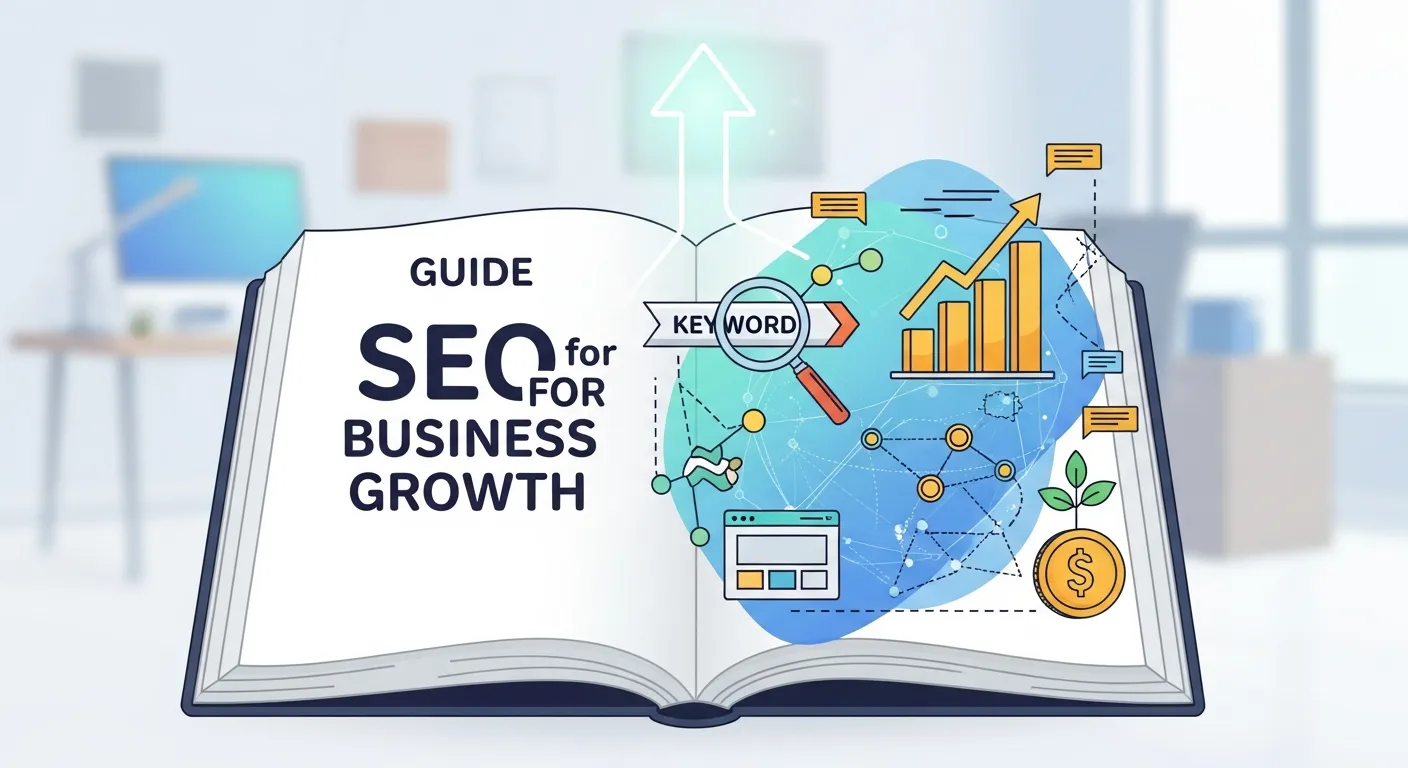
SEO is a long-term strategy that improves website visibility, drives organic traffic, and boosts revenue. By mastering keyword research, on-page, technical, and off-page SEO, businesses can build authority and achieve sustainable online growth.
A strong online presence is a fundamental requirement for business survival and expansion. Search Engine Optimization sits at the very heart of this online presence. When potential customers look for solutions, products, or services, they turn to search engines. If your business fails to appear on the first page of those search results, you become essentially invisible to a massive audience of highly targeted prospects.
Leveraging SEO for business growth is not a mystery; it is a systematic process of aligning your digital assets with what search engines and users want. This comprehensive guide walks you through everything you need to know about using search engine optimization for companies. We cover the core fundamentals of how search engines operate, the critical importance of keyword research, and the actionable steps you can take across on-page, off-page, and technical SEO. By the end of this extensive post, you will have a clear, strategic roadmap to increase website ranking on Google, attract high-quality traffic, and ultimately drive sustainable revenue.
Understanding SEO Fundamentals
Before jumping into advanced tactics, you need a solid grasp of the basics. Building a successful digital marketing strategy requires a clear understanding of fundamental SEO principles. Without this foundation, advanced organic traffic growth techniques will fail to deliver lasting results.
What is Search Engine Optimization?
Search Engine Optimization (SEO) is the deliberate practice of improving your website to increase its visibility in search engines. The goal is to rank as high as possible for specific search queries relevant to your business. Unlike paid advertising, where you pay for each click, SEO focuses on earning non-paid traffic. This traffic holds immense value because it consists of people actively looking for what you offer. Implementing search engine optimization for companies means establishing trust and authority over time.
For a clear breakdown of basic web optimization practices, reviewing university guidelines on how to optimize websites for search provides great foundational knowledge.
How Search Engines Work

Search engines use automated bots, often called spiders or crawlers, to scour the internet. These bots follow links from page to page, gathering information about the content they find. They then store this information in a massive database called an index.
When a user types a query into the search bar, the search engine sifts through its index to provide the most relevant and useful results. Complex algorithms evaluate hundreds of ranking factors to determine which pages best answer the user’s query. Understanding this process is vital for utilizing SEO for business growth.
Key SEO Terminology
To navigate the world of search marketing effectively, you should familiarize yourself with several key terms:
- Keywords: The exact words and phrases users type into search engines.
- SERP (Search Engine Results Page): The page displayed by a search engine in response to a user’s query.
- Ranking Factors: The specific criteria search engines use to evaluate and rank web pages.
- Crawlability: How easily search engine bots can navigate and read your website’s content.
- Indexability: The ability of search engines to store your pages in their database.
Keyword Research: The Foundation of SEO

Keyword research is the process of identifying the exact terms your target audience uses when searching for products, services, or information related to your business. It acts as the compass that guides your entire strategy. Proper keyword research remains one of the most vital organic traffic growth techniques available.
Identifying Target Keywords
Start by brainstorming a list of core topics relevant to your business. If you sell running shoes, your topics might include “marathon training,” “best running shoes,” or “trail running gear.” From there, identify specific keywords within those topics. Look for terms that boast a decent search volume but lack overwhelming competition.
Understanding Search Intent
Search intent defines the “why” behind a search query. Search engines categorize intent into four main types:
- Informational: The user wants to learn something.
- Navigational: The user wants to find a specific website.
- Transactional: The user wants to complete a purchase.
- Commercial Investigation: The user is researching before making a purchase.
Matching your content to the correct search intent is crucial to increase website ranking on Google.
Long-Tail Keywords vs. Short-Tail Keywords
A successful campaign balances different types of keywords to capture users at various stages of the buying journey.
Keyword Types Comparison
|
Feature |
Short-Tail Keywords |
Long-Tail Keywords |
|---|---|---|
|
Length |
1-2 words |
3+ words |
|
Search Volume |
Very High |
Low to Medium |
|
Competition |
Extremely High |
Lower |
|
Conversion Rate |
Generally Low |
High |
|
Example |
“Running shoes” |
“Best running shoes for flat feet” |
Long-tail keywords are essential SEO strategies for small business owners because they allow you to compete in niche markets without fighting massive corporations for broad terms.
Tools for Keyword Research
You do not have to guess what people search for online. Several robust tools provide data-backed insights to guide your decisions.
- Google Keyword Planner: A free starting point that shows search volume ranges and paid competition levels.
- Ahrefs: Offers deep insights into keyword difficulty, search volumes, and competitor gaps.
- SEMrush: Provides comprehensive keyword analytics and tracks your ranking progress.
- Moz Keyword Explorer: Helps identify keyword opportunities and SERP features.
On-Page SEO Optimization
On-page SEO involves optimizing individual web pages to rank higher and earn more relevant traffic. This means making sure your content is easily understandable by both search engines and human readers. Excellent on-page tactics are core organic traffic growth techniques.
Title Tags and Meta Descriptions
Your title tag is the clickable headline that appears on the SERP. It should be compelling, accurately describe the page’s content, and include your primary keyword naturally. Keep it under 60 characters to prevent truncation.
The meta description is the short summary beneath the title. While it does not serve as a direct ranking factor, a well-written meta description significantly improves your click-through rate. Include secondary keywords and a clear call to action to entice users to click.
Optimizing Content with Keywords
Once you identify your target keywords, naturally integrate them into your content. Place your primary keyword in the main heading (H1), a few subheadings (H2, H3), and organically throughout the text.
Avoid keyword stuffing—forcing keywords where they do not belong. This practice harms your readability and triggers search engine penalties. Instead, focus on using LSI (Latent Semantic Indexing) keywords, which are conceptually related terms that help search engines understand your topic’s depth. Proper content optimization is essential to increase website ranking on Google.
Image Optimization
Search engines cannot “see” images the way humans do. You must tell them what an image depicts using alt text (alternative text). Descriptive alt text helps search engines understand the visual context and improves accessibility for visually impaired users.
Additionally, compress your images before uploading them. Large image files slow down your page speed, which negatively impacts your rankings. Use descriptive file names rather than generic numbers.
Internal Linking Strategy
Internal links connect one page of your website to another. They help search engines understand the structure of your site and discover new pages. They also keep visitors on your site longer by directing them to related, valuable content.
Be strategic with your internal linking. Use descriptive anchor text that provides context for the linked page. A strong internal linking architecture distributes page authority throughout your site, supporting comprehensive SEO for business growth.
Technical SEO Essentials
Technical SEO ensures that your website meets the technical requirements of modern search engines. It happens entirely behind the scenes but remains critical for crawling, indexing, and ranking. You cannot utilize search engine optimization for companies effectively without a technically sound website.
Website Speed and Mobile-Friendliness
Users expect websites to load almost instantly. A slow website frustrates visitors and causes them to leave rapidly, which signals to Google that your site provides a poor user experience.
Furthermore, since the majority of searches now occur on mobile devices, Google uses mobile-first indexing. Your site must look and function perfectly on smartphones and tablets. Use responsive design to ensure your website adapts seamlessly to any screen size.
Site Architecture and URL Structure
A logical site architecture makes it easy for both users and search engine bots to navigate your website. Organize your content into clear categories and subcategories. Maintain a flat architecture so users can reach any page within three clicks from the homepage.
Keep your URL structures simple, readable, and descriptive. A URL like yourwebsite.com/services/seo-consulting provides clear context, whereas yourwebsite.com/?p=123 offers zero information to search engines.
XML Sitemaps and Robots.txt
An XML sitemap acts as a roadmap of your website. It tells search engines exactly which pages are most important and how often they update. Submit your sitemap through Google Search Console to ensure efficient crawling.
The robots.txt file gives specific instructions to search engine bots about which pages they should or should not crawl. Use this file carefully to prevent search engines from indexing duplicate pages or sensitive backend files.
Schema Markup
Schema markup is a specific form of microdata you add to your website’s code. It helps search engines understand the highly specific context of your content, such as identifying a page as a recipe, a local business, or a product.
Implementing schema markup helps your listings appear with “rich snippets” in the SERPs. Rich snippets include visual elements like star ratings, price tags, or thumbnail images, making your result stand out and drastically improving click-through rates.
Off-Page SEO: Building Authority

Off-page SEO involves actions taken outside of your own website to impact your rankings. The primary goal here is to build your site’s authority and trustworthiness in the eyes of search engines. Authority building is crucial for maximizing SEO for business growth.
Backlink Building Strategies
Backlinks—links from other websites pointing to yours—remain one of the most powerful ranking factors. Search engines view them as votes of confidence. The more high-quality votes you have, the more authoritative your site appears.
Focus on earning backlinks from reputable, relevant websites in your specific industry. Effective backlink organic traffic growth techniques include:
- Guest Blogging: Writing high-quality articles for other websites in exchange for a link back to your site.
- Broken Link Building: Finding broken links on other websites and offering your content as a replacement.
- Original Research: Publishing unique data, surveys, or case studies that naturally attract citations from other publishers.
Social Media Signals
While social media shares do not act as direct ranking factors, they amplify your content’s reach. Increased visibility leads to more natural backlinks and brand awareness, which indirectly supports your SEO efforts. Maintain active social media profiles to distribute your content to a wider audience.
Online Directories and Citations
Ensuring your business appears accurately on relevant online directories builds significant trust. Consistent NAP (Name, Address, Phone number) information across the web is particularly important for local ranking success. Submit your business to industry-specific directories, Yelp, and the Better Business Bureau to establish strong foundational citations.
Content Strategy for SEO
Content and SEO remain inextricably linked. You cannot have a successful search engine optimization for companies strategy without publishing high-quality content. Content serves as the vehicle that carries your keywords and attracts your backlinks.
Creating High-Quality, Valuable Content
Google strictly prioritizes content that is helpful, reliable, and people-first. Your content must thoroughly answer the searcher’s query and provide a demonstrably better experience than your competitors. Write for your human audience first and search engines second. Use formatting elements like bold text, bullet points, and short paragraphs to make your content easily scannable.
Diversifying Content Types
Diversify your output to appeal to different preferences and capture various search intents. Publish comprehensive blog posts, engaging videos, informative infographics, and detailed whitepapers. Different formats can rank in different parts of the SERP, such as video carousels or Google Images.
Content Freshness and Regular Updates
Search engines favor up-to-date, highly relevant information. Regularly audit your existing content library to ensure facts remain accurate, links work perfectly, and the information is still useful. Updating an old, declining blog post often yields a rapid boost in rankings. This process is one of the most efficient organic traffic growth techniques available.
Measuring SEO Success and Analytics
You cannot improve what you do not measure. Tracking your SEO performance allows you to see exactly what works, identify areas for rapid improvement, and demonstrate a clear return on investment. Analytics guide the continuous refinement of SEO for business growth.
Key Performance Indicators (KPIs) for SEO
To evaluate your search engine optimization for companies effectively, monitor the following KPIs:
- Organic Traffic Volume: The number of visitors arriving from non-paid search results.
- Keyword Rankings: The specific positions your pages hold for target queries.
- Bounce Rate: The percentage of visitors who leave your site after viewing only one page.
- Conversion Rate: The percentage of organic visitors who complete a desired action, such as a purchase or lead form submission.
Utilizing Google Analytics and Search Console
Google Analytics provides deep insights into how users behave on your site, where they come from, and which specific pages they visit most frequently. It helps you understand the user journey and pinpoint where visitors drop off.
Google Search Console shows you exactly how your site appears in Google search results. It reveals which queries drive traffic, monitors your click-through rates, and alerts you to any technical indexing issues. Combining data from both platforms gives you a complete view of your SEO health.
Tracking Rankings, Traffic, and Conversions
Use your chosen SEO software to monitor your keyword rankings over time. Keep a close eye on your organic traffic trends in Google Analytics to spot seasonal fluctuations or sudden drops. Set up strict conversion tracking to connect your SEO efforts directly to your business’s bottom line revenue.
Local SEO for Business Growth
If your business serves a specific geographic area, local SEO is absolutely essential for driving foot traffic and generating local leads. Local SEO strategies for small business owners provide a massive competitive advantage.
Google Business Profile Optimization
Claim and fully optimize your Google Business Profile. Fill out every section completely, add high-quality photos of your premises, ensure your operating hours are strictly accurate, and post regular business updates. This profile is crucial for appearing in the “Local Pack”—the map and top three local listings that dominate the top of local search results.
Local Citations and Reviews
Encourage satisfied customers to leave positive, detailed reviews on your Google Business Profile and other relevant platforms like Yelp or Trustpilot. Respond to all reviews, both positive and negative, in a highly professional manner. Search engines view consistent positive reviews as a strong signal of trust and local authority.
Future Trends in SEO
SEO is an ever-evolving field. Staying ahead of the curve requires an understanding of exactly where the search industry is heading. Adapting to these trends ensures you continuously increase website ranking on Google.
Voice Search Optimization
With the rapid rise of smart speakers and mobile voice assistants, optimizing for voice search is becoming critical. Voice queries are often much longer and far more conversational than typed searches. Focus heavily on answering specific “who, what, where, when, and how” questions clearly and concisely within your content.
AI and Machine Learning in SEO
Search engines lean heavily on AI and machine learning algorithms to better understand user intent and evaluate content quality. Similarly, AI tools are transforming how professionals conduct research, draft outlines, and analyze massive datasets. Embracing these advanced tools streamlines your workflow, but you must always maintain a human touch in your final content creation to ensure originality and depth.
User Experience (UX) as a Ranking Factor
Google’s Core Web Vitals update solidified user experience as a strict ranking factor. Search engines want to send users to sites that are incredibly fast, visually stable, and easy to use. Prioritizing clear site navigation, lightning-fast load times, and mobile accessibility will be increasingly important for maintaining top rankings moving forward.
Common SEO Mistakes to Avoid
Avoiding major pitfalls is just as important as implementing best practices. Keep a sharp eye out for these common errors that sabotage SEO for business growth.
Keyword Stuffing
Jamming your target keyword into your content unnaturally harms your readability and results in strict penalties from search engines. Use keywords organically and focus heavily on synonyms, natural phrasing, and related industry terms.
Ignoring Mobile Optimization
A site that performs poorly on mobile devices will see its rankings suffer across the board, regardless of desktop performance. Ensure your design is highly responsive, buttons are easy to tap, and text is readable without zooming in on small screens.
Neglecting Content Quality
Publishing thin, poorly written, or duplicated content wastes your time and resources. Search engines filter out low-value pages quickly. Focus entirely on depth, stunning originality, and providing genuine, actionable value to your readers.
Sustaining Business Growth with SEO
Search engine optimization is never a one-time project; it requires an ongoing, dedicated process. Search engine algorithms change constantly, and competitors work tirelessly to outrank you.
By mastering the core fundamentals, conducting thorough keyword research, optimizing your website technically, and consistently producing high-quality content, you build a marketing engine that drives long-term success. Stay highly patient, measure your results meticulously, and adapt your strategies based on data. The investment you make in SEO for business growth today will yield substantial revenue dividends for years to come.
Frequently Asked Questions
What does SEO stand for and why is it important?
SEO stands for Search Engine Optimization, which is the process of improving a website’s visibility on search engines. It is vital because higher visibility leads to more organic traffic and potential customers. For a detailed explanation, check out what SEO actually means to grasp search visibility basics.
How long does it take to see results from SEO?
SEO is a long-term strategy that typically requires three to six months to show significant results. The timeline depends heavily on your industry’s competition, your website’s current authority, and the consistency of your efforts. Patience and consistent optimization are key to success.
Are SEO strategies for small business different from large enterprises?
While the fundamental principles remain the same, small businesses usually focus more heavily on local SEO and highly specific long-tail keywords. Large enterprises often target broader, highly competitive terms and deal with complex technical site architectures. Both require high-quality content and authoritative backlinks.
Can I do SEO myself, or do I need to hire an agency?
You can absolutely learn and implement basic SEO practices yourself using free tools and educational resources. However, as your business grows, hiring an experienced agency or specialist can save time and provide advanced technical expertise. It depends entirely on your budget and available time.
How do backlinks help increase website ranking on Google?
Backlinks act as digital votes of confidence from other websites to yours. When authoritative sites link to your content, Google interprets this as a strong signal that your information is trustworthy and valuable. Earning high-quality backlinks significantly boosts your domain authority and rankings.
What is the difference between on-page and off-page SEO?
On-page SEO involves optimizations you make directly on your website, such as updating content, title tags, and site speed. Off-page SEO refers to actions taken outside your website to improve your reputation, such as link building and social media marketing. Both are required for a complete strategy.
Why is mobile-friendliness a ranking factor?
The vast majority of global internet searches now take place on mobile devices like smartphones and tablets. Google uses mobile-first indexing to ensure mobile users get a fast, readable, and functional experience. If your site is not mobile-friendly, it will rank poorly across all devices.
What are the best organic traffic growth techniques for new websites?
New websites should prioritize creating comprehensive, high-quality content targeting low-competition, long-tail keywords. Establishing a fast, technically sound website structure from day one is critical. Building foundational backlinks through guest posting and industry directories will also jumpstart traffic.
How often should I update my website’s content?
You should review and update your top-performing content at least once or twice a year to ensure accuracy and relevance. Regularly publishing new content—like weekly blog posts or industry updates—signals to search engines that your site is active and fresh.
How does search engine optimization for companies impact ROI?
SEO provides one of the highest returns on investment in digital marketing because organic traffic is essentially free once you rank. Unlike paid ads that stop generating leads when the budget runs out, SEO continues to drive targeted, high-converting traffic over a long period.
