
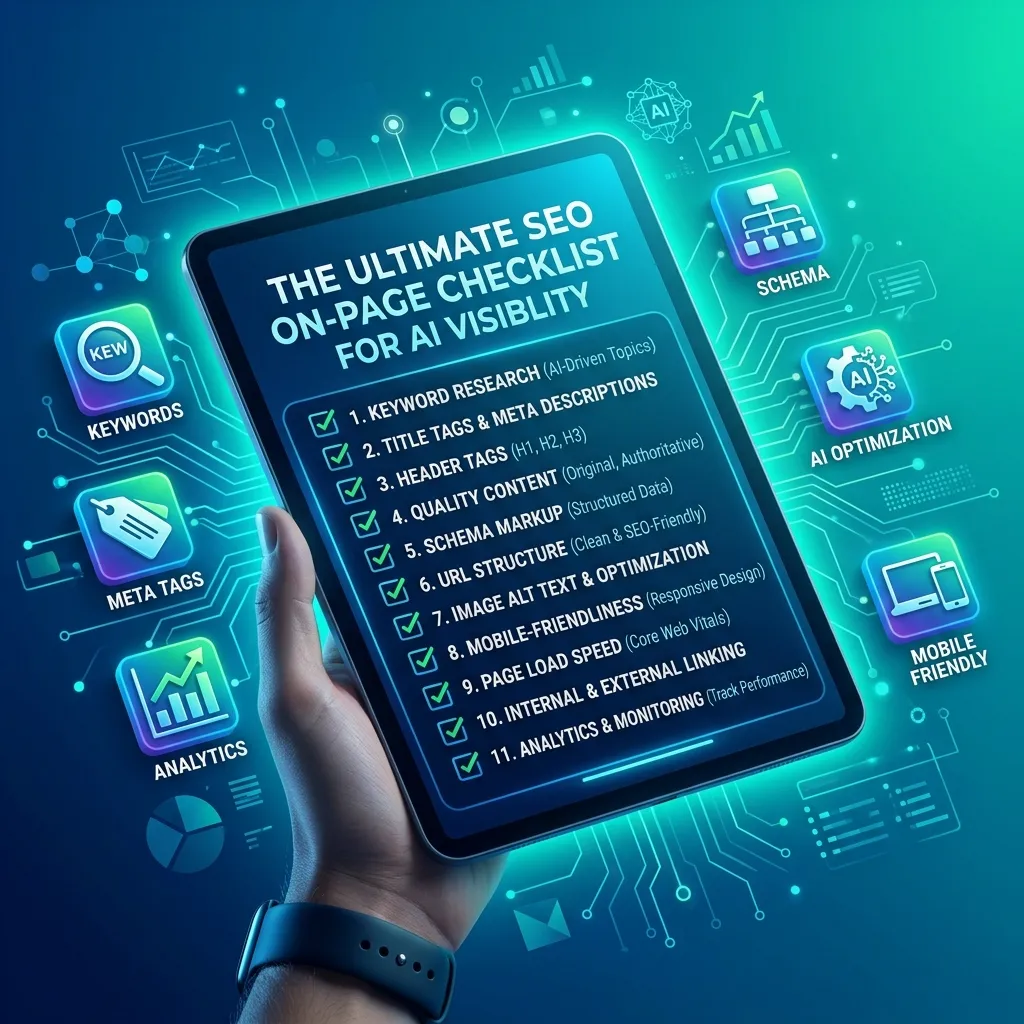
SEO on-page optimization is evolving with AI-driven search. Success now depends on keyword intent, structured content, meta tags, schema markup, and internal linking, ensuring websites are readable, relevant, and easily understood by both users and AI.
Search engine optimization is undergoing a massive transformation. Historically, on-page SEO focused strictly on optimizing web page content and HTML source code for traditional search engine algorithms. Webmasters spent their time fine-tuning keyword density and building backlink profiles to secure the top spot on a results page. Today, the landscape is much more complex, requiring a robust seo on-page checklist.
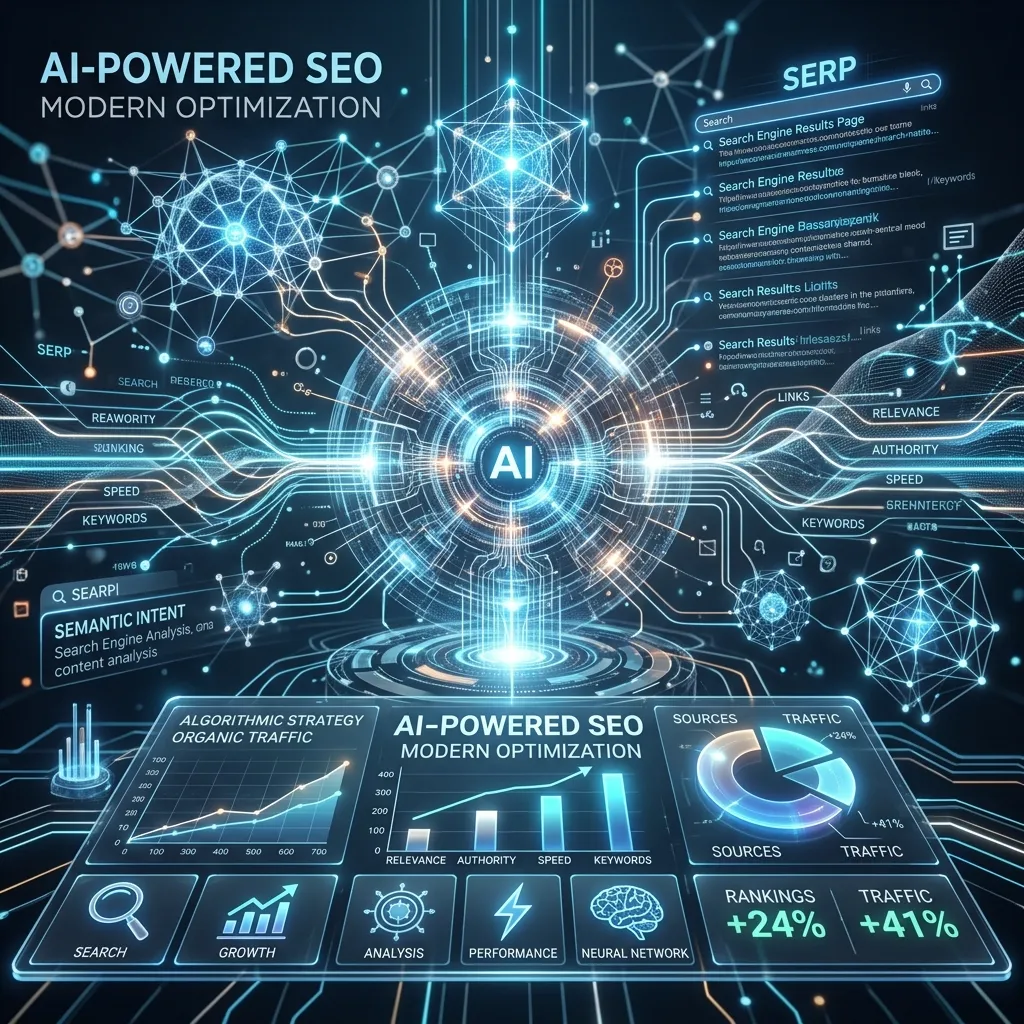
Artificial intelligence now powers search experiences, shifting the focus toward Generative Engine Optimization. Search engines deploy generative AI to read, synthesize, and summarize web pages directly in the search results. If your content lacks clear structure, factual density, or semantic relevance, AI models will simply overlook your website in favor of a more easily digestible source.
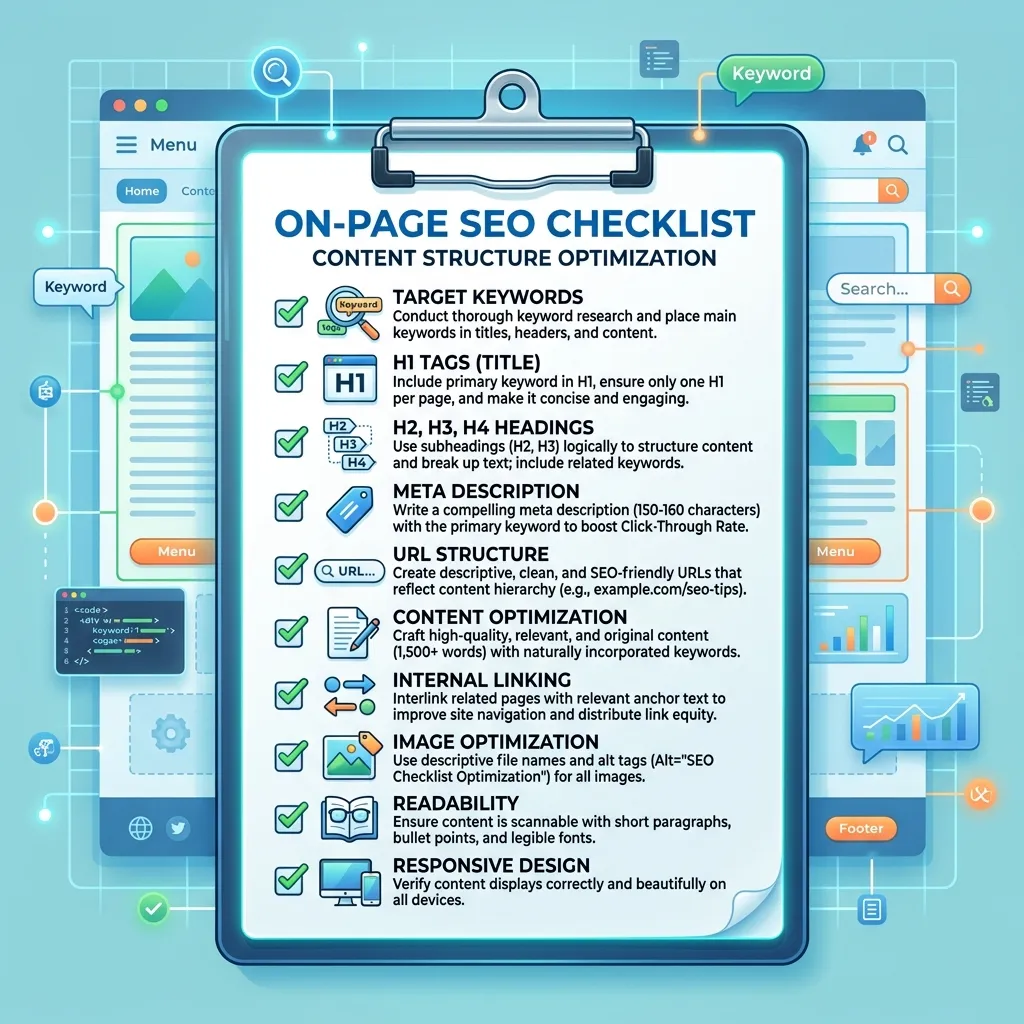
This comprehensive seo on-page checklist covers everything you need to know to rank highly in today’s search environment. We will explore the core pillars of on-page seo, dive into advanced strategies for AI visibility, and outline exactly how to structure your content so both human readers and machine learning algorithms recognize your website as a definitive authority.
Core Elements of Your SEO On-Page Checklist
To build a solid foundation for AI visibility, you must first master the traditional elements of on-page seo. These core components tell search engine crawlers exactly what your page is about. Every successful seo on-page checklist begins with these fundamentals.
Understanding User Intent and Keyword Placement
Keyword research remains the bedrock of any successful seo on-page checklist. However, the focus has shifted from finding high-volume keywords to deeply understanding user intent. User intent categorizes the specific goal a searcher has when they type a query.
Types of User Intent
The main types of user intent include:
- Informational intent: The user wants to learn something new.
- Navigational intent: The user wants to find a specific website.
- Transactional intent: The user is ready to make a purchase.
- Commercial investigation: The user wants to compare products before buying.
Start your seo on-page checklist by identifying a primary keyword that perfectly aligns with the core topic of your page. From there, identify secondary keywords that support the main theme.
Strategic Keyword Placement
Proper keyword placement tells AI models exactly what your content addresses. You must practice smart keyword placement in your header tags, introduction, and conclusion. Do not stuff keywords unnaturally. Instead, use semantic variations and synonyms. Effective keyword placement means incorporating your primary term into the URL, the meta title, and the first few paragraphs of your text, ensuring an optimal seo on-page checklist implementation.
For added effectiveness, include keywords in image alt text, subheadings, and even call-to-action buttons. This allows your content to be more easily found not just by users but also by AI assistants curating direct answers from your page.
Crafting the Perfect Meta Title and Meta Description
Title tags and meta descriptions serve as your website’s digital storefront. They are the first elements users and AI search bots encounter. No seo on-page checklist is complete without strict guidelines for these tags.
Writing an Engaging Meta Title
Craft compelling, keyword-rich title tags that accurately describe the page content. A strong meta title places the primary keyword near the beginning. You must keep your meta title under 60 characters to prevent search engines from truncating the text. An optimized meta title directly impacts your click-through rate, which signals to AI systems that your content is valuable. Always check your meta title off your seo on-page checklist before publishing.
Optimizing the Meta Description
Write effective meta descriptions to boost your organic click-through rates. While meta descriptions do not directly influence rankings, a higher click-through rate sends a positive behavioral signal to search algorithms. Keep your meta descriptions under 160 characters. Include your primary keyword naturally, and end with a clear call-to-action that encourages the user to click.
Meta descriptions can also be enhanced by summarizing the main value of your content and including secondary keywords without keyword stuffing. Include emotional triggers and numbers or specifics where relevant.
Header Tag Hierarchy for AI
Header tags create a hierarchical structure that makes your content easy to read. Proper structure is incredibly important for AI optimization, as large language models rely on headings to understand the relationship between different concepts on your page. Adding header organization to your seo on-page checklist is mandatory.
Every web page should have exactly one H1 tag, representing the main topic. Subtopics should use H2 tags, and any further granular details should fall under H3 or H4 tags. Integrate secondary keywords naturally within these headers. Phrase your H2 and H3 tags as specific, long-tail questions that mirror how users query AI chatbots. A conversational subheading provides immediate context to AI systems parsing your text.
Optimizing Header Depth and Content Logic
To further improve AI comprehension, use headers to break down large or technical ideas into bite-sized information. This makes it much easier for both users and AI assistants to understand, extract, and serve your insights properly within search snippets or voice search results.
Advanced Strategies in Your SEO On-Page Checklist
Once you nail the basics of on-page seo, you must implement advanced tactics tailored specifically for AI-driven search engines and generative models. This elevates your seo on-page checklist from basic to expert.
Structured Data and Schema Markup
Structured data, or schema markup, is a standardized format for providing information about a page and classifying the page content. It translates your human-readable content into a language that AI systems natively understand. Every advanced seo on-page checklist requires structured data.
By implementing schema markup, you explicitly tell search engines what your data means. Common schema types include Article, Product, FAQ, How-To, and Local Business. Adding structured data can enable special search result features and enhancements, making your content significantly more visible to AI models summarizing the web.
Practical Schema Markup Tips
Use tools like Google’s Structured Data Markup Helper to generate valid JSON-LD snippets. Test your markup using the Rich Results Test tool. Regularly update your SEO on-page checklist to reflect latest schema types supported by popular search engines.
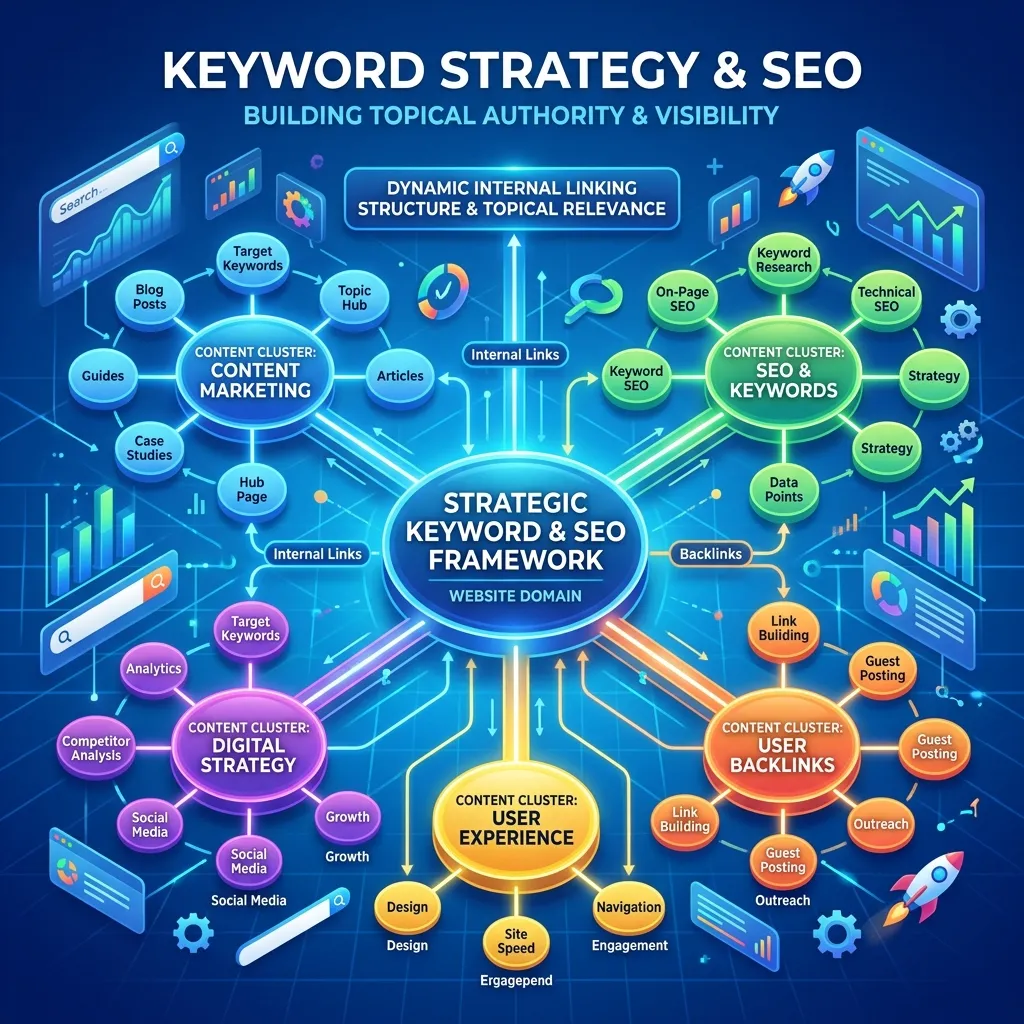
Building an Internal Linking Strategy
Internal linking guides both AI systems and human users through your website’s architecture. It distributes page authority and establishes a clear hierarchy of information. A robust internal linking strategy is a non-negotiable part of your seo on-page checklist.
Build topic authority by linking related pieces of content together. If you have a pillar page about digital marketing, use your internal linking strategy to connect it to cluster pages about email marketing, social media, and on-page seo. Use descriptive anchor text that clearly indicates what the destination page is about. Avoid generic anchor text like “click here.” A well-planned internal linking strategy helps generative AI connect the dots between your topical clusters.
How to Evaluate Your Internal Linking
Periodically audit your site for broken or outdated links. Map your topic clusters and make sure each important page has at least three internal links pointing to and from it. Monitor analytics for changes in user flow and page authority as you expand your internal linking strategy.
Outbound Links and Factual Density
External links direct users to other authoritative websites. Linking to highly trusted sources builds your own website’s credibility.
Use external links when you cite specific statistics, reference industry reports, or quote subject matter experts. Fact density is a critical component of AI optimization. Provide specific, verifiable details with clear inline citations. Generative AI models prioritize content that proves its claims with reputable external links. Make sure outbound linking is marked off your seo on-page checklist.
User Experience and Technical Integration
User experience signals tell search engines whether visitors actually enjoy interacting with your website. Your seo on-page checklist must bridge the gap between technical performance and content quality.
Readability and Formatting
High-quality content provides depth, relevance, and genuine value to the reader. Search engines and AI models prioritize content that thoroughly answers the user’s query without unnecessary fluff.
Ensure your writing maintains a high standard of readability. Blend short, punchy sentences with longer, more descriptive ones to keep the reader engaged. Incorporate multimedia elements such as high-resolution images, videos, and infographics to break up large walls of text and cater to different learning styles. Simple, clear formatting is a staple of a good seo on-page checklist.
Focus on clarity. Make sure every paragraph leads logically to the next. Use bullet points for step-based instructions or lists. Keep your Flesch reading ease score high to appeal to as many users (and AI scoring models) as possible.
URL Structure Optimization
A clean, descriptive URL provides immediate context about the page’s content. Search engines use the URL to categorize the page within your site’s broader architecture.
Create short, concise URLs that include your primary keyword. Avoid using long strings of numbers, special characters, or unnecessary stop words. A clean URL is vastly superior to a messy string of characters. Verifying URL structure is a quick but vital step in your seo on-page checklist.
Regularly audit your URLs and rewrite older ones as site structure changes. Consider placing topic categories in the URL path if it helps clarify your site hierarchy and strengthens topical authority.
Multimedia and Image Alt Text
Image optimization improves page load speeds and ensures your visual content appears in image search results.
Write descriptive image alt text for every visual asset on your page. Alt text makes your website accessible to visually impaired users who rely on screen readers. It also tells search engine crawlers exactly what the image depicts. Keep image file sizes small to maintain rapid loading speeds.
Compress images before uploading. Use responsive design so multimedia displays well on all screen sizes. Include your focus keyword or a relevant secondary keyword naturally in your alt text when appropriate, as this can help boost visibility in both general and visual search.
Career Growth in Modern SEO
Mastering a modern seo on-page checklist takes practice and dedication. As AI continues to reshape the landscape, professionals must continually update their skill sets. Staying ahead of algorithmic shifts requires a deep understanding of on-page seo, meta title formulation, smart keyword placement, and building a flawless internal linking strategy.
To stay competitive, invest in continuous learning. There are numerous online courses and certifications focusing on the latest on-page seo practices and AI-driven optimization methods. If you want to validate your skills and advance your career, you might consider taking steps to become a certified digital marketing professional to prove your expertise to employers.
Join SEO communities and attend webinars to keep pace with changing trends. Collaborate with other SEO professionals to share on-page checklist tactics and case studies.
Elevating Content With Topical Clusters
As search engines become smarter, topic clustering and semantic context are crucial parts of any seo on-page checklist. Instead of publishing isolated pages, group them into clusters around a “pillar” or primary topic.
How to Structure Topic Clusters
- Pillar Page: Covers a broad subject and targets a high-traffic keyword.
- Cluster Content: In-depth articles addressing narrower subtopics, all linking back to the pillar.
- Strategic Internal Links: Each cluster page links to both the pillar and other relevant cluster pages.
This strategy builds authority within your niche and helps both users and AI systems understand the full scope of your website.
Traditional vs. AI-Focused SEO On-Page Checklist
To fully grasp the evolution of search, review this table comparing traditional optimization with modern AI requirements.
|
Optimization Element |
Traditional SEO Focus |
Modern AI Search Focus |
|---|---|---|
|
Keyword Placement |
Exact match repetition |
Semantic variations and context |
|
Meta Title |
Strictly for ranking |
Click-through rate and clarity |
|
Internal Linking Strategy |
PageRank sculpting |
Topical cluster mapping |
|
Content Structure |
Large text blocks |
Conversational H2/H3 headers |
|
Factual Density |
General statements |
Highly specific, cited facts |
|
Overall Goal |
Appeasing crawlers |
Answering user intent immediately |
Following an updated seo on-page checklist ensures you satisfy both traditional crawlers and modern AI parsers.
Frequently Asked Questions
What is an seo on-page checklist?
An seo on-page checklist is a strategic guide used to optimize individual web pages for search engines and AI models. It covers essential elements like keyword placement, meta tags, header structure, and internal linking. Using this checklist ensures your content is fully accessible and understandable to both human readers and search algorithms.
Why is the meta title so important for AI search?
The meta title acts as the primary label for your content, telling AI models and users exactly what the page is about. A well-crafted meta title improves click-through rates, which sends positive engagement signals to search engines. It provides immediate context that helps generative models categorize your information.
How does keyword placement impact on-page seo?
Strategic keyword placement helps search engines understand the central theme of your content without appearing spammy. Placing keywords naturally in the meta title, headers, and opening paragraphs establishes topical relevance. Proper keyword placement ensures AI models associate your page with the correct user queries.
What makes a good internal linking strategy?
A strong internal linking strategy connects related topics on your website to build a comprehensive web of authority. It helps AI crawlers discover new pages and understand the hierarchy of your content clusters. Using descriptive anchor text in your internal linking strategy improves navigation for users and context for search engines.
How do I optimize content for user intent?
Optimizing for user intent means aligning your content format and depth with what the searcher is actually trying to achieve. If a user wants to learn, provide detailed guides; if they want to buy, provide clear product pages. Your seo on-page checklist must prioritize answering the user’s specific underlying question directly.
Do I still need to use H2 and H3 tags?
Yes, using H2 and H3 tags is absolutely critical for breaking down complex information into digestible sections. These header tags create a logical outline that AI models use to parse and summarize your content. A clear hierarchy drastically improves readability and overall on-page seo performance.
How does readability affect my seo on-page checklist?
Readability directly impacts how long users stay on your page and how easily AI models can synthesize your text. Simple language, short sentences, and clear formatting reduce cognitive load and bounce rates. Good readability ensures your facts can be easily extracted by generative search engines.
What is the role of structured data in on-page seo?
Structured data, or schema markup, explicitly translates your web page content into a standardized format that machines natively understand. It helps AI search engines identify specific entities like products, FAQs, and reviews. Implementing schema is a mandatory step in any modern seo on-page checklist.
Why should I include outbound links to other sites?
Including outbound links to authoritative websites builds trust and proves the factual density of your content. AI models prefer to surface content that references credible data, industry reports, and expert sources. Outbound linking validates your claims and strengthens your overall on-page seo profile.
How often should I update my seo on-page checklist?
You should review and update your seo on-page checklist regularly to keep pace with evolving search engine algorithms and AI advancements. As user behaviors and technological capabilities shift, your optimization tactics must adapt. Continuous refinement ensures your content maintains peak visibility over time.
By applying the principles of this seo on-page checklist, you’ll be well-equipped to optimize your website for both traditional search engines and the latest AI-driven search technologies. Remember that true SEO success is an ongoing process—review, refine, and expand your checklist as algorithms and user expectations evolve. Invest time in mastering each on-page seo element, and your website will stand out as both an authoritative resource for users and a preferred source for AI-generated answers and recommendations.
