
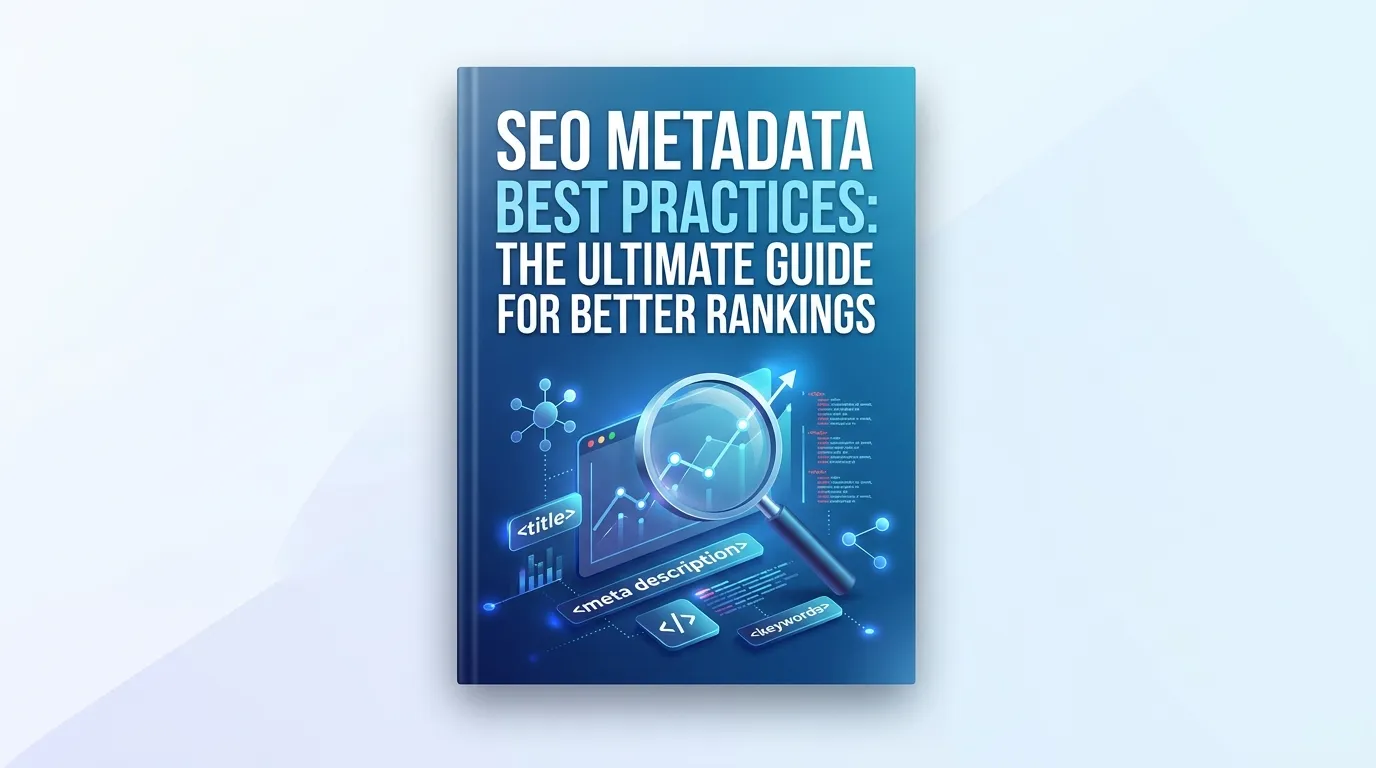
SEO metadata best practices improve search visibility by optimizing title tags, meta descriptions, headers, URLs, and alt text. Proper metadata helps search engines understand content, increases click-through rates, and boosts organic website traffic effectively.
When you build a webpage, you spend hours perfecting the content, layout, and user experience. But what happens behind the scenes is often just as critical for your site’s success. Search engines do not see your website the way humans do. They rely on invisible code to understand context, relevance, and value. That code is known as metadata.
Mastering seo metadata best practices is essential for anyone who wants to improve their organic search visibility. Metadata is simply data that describes other data. In the context of search engine optimization, it consists of HTML tags embedded in a webpage’s header. These tags communicate directly with search engine crawlers, telling them exactly what a page is about, who should see it, and how it should appear in search results.
The importance of following seo metadata best practices cannot be overstated. Search engines use this information to determine your rankings. Meanwhile, human users rely on elements of this metadata—specifically title tags and meta descriptions—to decide whether your link is worth clicking. Well-crafted metadata acts as your digital storefront, drawing visitors in and signaling your authority to the algorithms.
When you invest time in mastering these details, you’re not just supporting your SEO efforts—you’re also delivering a better browsing experience for your users. When your pages are easy to understand, well-organized, and visually appealing in search engine results, more visitors will click through, stay longer, and convert at higher rates. Many marketers overlook the technical side of SEO, but it’s often this foundational effort that sets high-performing sites apart from the rest.
In this guide, we will explore the core components of on-page optimization. By understanding and applying seo metadata best practices across all these elements, you can significantly boost your organic traffic and visibility.
Title Tags Best Practices

Title tags are the most critical piece of SEO metadata on any webpage. They dictate the clickable headline that appears in search engine results pages (SERPs) and heavily influence how search engines rank your page.
Ideal Length and Character Limits
Search engines typically display the first 50 to 60 characters of a title tag. If your title exceeds this limit, Google will cut it off and append an ellipsis. To ensure your full message gets across, keep your titles within this character range. Adhering to these limits is a cornerstone of seo metadata best practices. You can use pixel-width checking tools to verify that your title will fit perfectly on both desktop and mobile screens.
Avoiding Truncation
Truncated titles can confuse users and lower your click-through rates. By keeping your primary message front and center, you guarantee clarity.
A practical approach is to lead with the main keyword, quickly convey the page’s topic, and, if room permits, add a unique selling point. Always review how your title appears on both desktop and mobile SERPs, as the visible width varies across devices. Adopting a mobile-first perspective is especially important as more searches shift to mobile.
Including Target Keywords
Always place your primary target keyword near the beginning of your title tag. Search engines give slightly more weight to the words that appear first. This placement also helps users quickly identify that your page matches their search intent, which aligns perfectly with modern seo metadata best practices.
Think strategically about keyword selection. Research your niche and competitors to identify not just popular keywords, but also relevant long-tail variations. Where possible, use variations and natural language queries users might type. Over time, search algorithms have become smarter, rewarding relevance and context over rigid keyword stuffing.
Crafting Compelling and Descriptive Titles
A title tag needs to do more than just house keywords. It must entice users to click. Use strong action verbs, numbers, or emotional triggers to make your headline stand out. Instead of a boring title like “Shoe Repair Services,” try something more engaging like “Expert Shoe Repair Services: Restore Your Footwear Fast.”
Headline formulas that work well include lists (“10 Proven Metadata Tips for SEO”), how-to phrases (“How to Optimize Title Tags for Google”), and solution-oriented statements (“Fix Your Metadata for Higher Traffic in 2024”). Experiment and analyze what best resonates with your visitors.
Brand Name Inclusion
If you have space left in your title tag, include your brand name at the end. Use a pipe (|) or a hyphen (-) to separate it from the main title. This builds brand awareness over time. If your brand is highly recognizable, this inclusion can actually increase your click-through rate.
Consistency in the way you present your brand name (e.g., always at the end of the title) also establishes trust with returning visitors and supports your site’s professional identity.
Leveraging Structured Title Tag Data
Using structured data (like Schema.org markup) can occasionally influence how Google displays your pages. While it doesn’t impact the title tag directly, a consistent, accurate title format combined with structured data can lead to enhanced listings, such as breadcrumbs or rich snippets, further improving visibility in the SERPs.
Meta Descriptions Best Practices

While meta descriptions do not directly impact search rankings, they heavily influence your click-through rate (CTR). Implementing seo metadata best practices here transforms your snippet into an organic advertisement.
Ideal Length and Character Limits
Google generally truncates meta descriptions around the 155 to 160-character mark. Aim to write concise summaries that fall just under this limit. This ensures your entire message is visible in the search results, preventing awkward cut-offs mid-sentence.
Writing Persuasive and Informative Descriptions
Your description should summarize the page content accurately while giving the user a reason to click. Address the user’s pain point and clearly state the value they will gain by visiting your site. Highlight specific features, benefits, or answers they will find.
For e-commerce pages, include free shipping, special offers, or product guarantees. For informational pages, hint at the valuable insight or problem-solving tips waiting for the visitor.
Call to Action and Keyword Usage
Every meta description needs a clear call to action (CTA). Tell the user exactly what you want them to do next. Phrases like “Learn more,” or “Get your free quote today” create a sense of urgency. Include your primary keyword naturally, as search engines will bold it in the SERPs when it matches the user’s query. Avoiding keyword stuffing is a critical rule of seo metadata best practices.
Consider split-testing different CTAs to see which drives higher CTRs. Tools like Google Search Console allow you to evaluate snippet performance and iterate on your copy for incremental gains.
Adapting Meta Descriptions for User Intent
Diverse searcher intents (informational, navigational, transactional) require slightly different emphases in your meta descriptions. For broad educational pages, address what the user will learn. For transactional, describe what the user gets. Analyzing SERPs for your main keyword can reveal which styles work best in your industry.
Header Tags (H1-H6) Best Practices

Header tags organize your content logically. They break up large walls of text, making your pages easier for users to read and simpler for search engines to crawl.
Structuring Content Effectively
Think of header tags like an outline for an essay. The H1 tag is the main title of the page, and there should only be one per page. H2 tags introduce main sections, while H3 tags introduce sub-sections within those H2s. Do not skip header levels. Moving directly from an H2 to an H4 confuses search engines.
A good HTML structure enhances not only search engine comprehension but also accessibility for assistive technology. For users navigating with screen readers, logical headers make site content much more approachable.
Using Keywords in Headers
Headers are an excellent place to include secondary keywords and long-tail variations. Following seo metadata best practices means weaving related terms naturally into your H2s and H3s to capture a broader range of search queries without sounding robotic.
Aim for clarity and relevance above all. A well-structured page, with keyword-rich but natural-sounding headers, sends a strong topical signal to search engines while improving scannability for readers.
Enhancing Readability and User Engagement
Well-crafted headers can boost on-page engagement metrics, like time on site and scroll depth. Visitors are more likely to stay and consume the content if each section feels purposeful and clearly defined. Clear headers help visitors find the specific information they need without frustration, a subtle factor in boosting SEO through lower bounce rates.
Image Alt Text Best Practices
Search engines cannot see images. They rely on alternative text (alt text) to understand what an image depicts.
Accessibility and Context
The primary purpose of alt text is accessibility. Screen readers use alt text to describe images to visually impaired users. Write your alt text so that a person who cannot see the screen can understand exactly what the image shows. This descriptive approach naturally benefits your SEO.
Remember that accessible image descriptions improve usability for all visitors, including those relying on text-only browsers or navigating slow Internet connections that fail to load images. Accessible design upholds your brand’s integrity and is increasingly weighted by search engines.
Strategic Keyword Integration
If the image genuinely relates to your target keyword, include the keyword in the alt text. Do not shoehorn keywords into images where they do not make sense. Implementing seo metadata best practices requires honesty; describe the actual image rather than forcing irrelevant keywords.
Optimizing Across Image Types
For complex graphics, charts, or infographics, the alt text should succinctly explain the main takeaway of the image, not just what is visually present. For purely decorative images, an empty alt attribute (alt=””) is best, as it tells screen readers to skip them. Detailed, targeted alt text for icons, CTA buttons, and diagrams can further expand your SEO reach by enabling images to appear in Google Images search, driving additional traffic to your site.
URL Structure Best Practices
Your URL is a minor ranking factor, but a well-optimized URL provides clarity to both users and search engine bots.
Clean and Descriptive Links
Your URL should indicate what the page is about before the user even clicks. Include your primary keyword in the URL slug. Avoid using confusing parameters, random numbers, or unnecessary symbols. Keep your URLs as short as possible and use hyphens to separate words.
Readable, predictable URLs appear more trustworthy and professional, a factor that can affect user CTR as well as search ranking. Retrofitting old URLs into concise, keyword-focused slugs (with appropriate 301 redirects) can make a big difference for legacy sites.
The Role of URL Structure in Site Architecture
Think of your URLs as the map of your website’s content hierarchy. If users (or search engines) can easily infer the site’s structure from URL paths, they’ll navigate more efficiently and index your pages more reliably. For example, “/blog/seo-metadata-tips” reflects a clear relationship to the blog’s main topic, supporting both navigation breadcrumbs and search relevance.
Establishing Metadata Procedures and Standards
To scale your SEO efforts, you need strict procedures. Implementing seo metadata best practices across a large website requires standardization, training, and regular audits. Without a documented procedure, different authors might use conflicting styles, leading to a messy and unoptimized site architecture.
Creating a consistent workflow ensures every new page meets your quality requirements before it goes live. This involves checking character limits, verifying keyword placement, and testing for mobile display issues.
Here are the key points to include in your internal metadata guidelines:
- Require unique title tags for every single URL on the domain.
- Enforce a mandatory review of meta descriptions for strong calls to action.
- Standardize the use of brand names at the end of title tags.
- Audit alt text for all informational images prior to publishing.
Review this helpful resource for establishing internal workflows: Learn about structured metadata procedures
To further illustrate how a standardized approach helps, let’s compare basic metadata implementation with advanced, procedure-driven implementation.
|
Feature |
Basic Metadata Implementation |
Advanced Procedure-Driven Implementation |
|---|---|---|
|
Title Tags |
Written quickly, often too long or too short. |
Strictly monitored for 50-60 character limits. |
|
Descriptions |
Auto-generated or copied directly from the first paragraph. |
Custom-written to drive clicks, featuring strong CTAs. |
|
Header Tags |
Randomly assigned based on font size preferences. |
Structurally nested (H1 -> H2 -> H3) for semantic clarity. |
|
Image Alt Text |
Ignored or stuffed with unrelated target keywords. |
Highly descriptive, benefiting both accessibility and SEO. |
|
Consistency |
Varies wildly depending on who publishes the post. |
Uniform across the entire domain, following seo metadata best practices. |
Choosing Tools for Workflow Automation
Larger teams benefit greatly from workflow and audit tools that integrate metadata checks directly into content management systems or code repositories. Automated audits can flag missing tags, duplicate content, or titles that exceed best-practice lengths—prompting fixes before launch.
Training Content Creators
A truly scalable metadata strategy also depends on educating everyone involved in content publishing. Share regular updates about search engine changes, hold periodic workshops, and maintain up-to-date documentation. The more your team understands the “why” behind each best practice, the fewer errors and inconsistencies you’ll see.
Other Important Metadata Considerations
Beyond the basics, several other metadata elements help search engines and social platforms interpret your content.
Open Graph and Twitter Cards
Open Graph tags control how your content appears when shared on platforms like Facebook and LinkedIn. Twitter Cards perform a similar function for Twitter. Configuring these tags ensures your links look professional and engaging, drastically improving social click-through rates.
For best results, every important page should specify its own Open Graph title, meta description, and preview image. Use images with appropriate dimensions and minimal text overlays to maximize compatibility across social apps. Testing your links’ appearance with each platform’s built-in tool can prevent sharing mishaps and embarrassing truncations.
Schema Markup and Canonical Tags
Schema markup is an advanced form of metadata that provides search engines with explicit clues about the meaning of a page. You can use schema to highlight reviews, recipes, or events. Canonical tags prevent duplicate content issues by telling search engines which version of a page is the master copy. Utilizing these tags represents advanced seo metadata best practices.
Enhanced Search Features
As Google and other search engines develop richer search results, schema markup directly impacts your visibility. Features such as review stars, FAQs, event details, and even product image carousels are increasingly common in SERPs, and they’re all powered by metadata.
Managing Metadata for Multiple Languages
If your site has international or multilingual audiences, proper hreflang tags instruct search engines which language or regional version to serve. This prevents content cannibalization between similar URLs and ensures you reach the right audience in every country you target.
Tools and Resources for Optimization
You do not have to manage your metadata blindly. Use SEO plugins like Yoast or Rank Math if you run WordPress. These tools provide real-time feedback on your title tags and keyword density. Furthermore, Google Search Console allows you to check your click-through rates for specific queries to see if your optimization efforts are working.
Additionally, browser extensions like MozBar and SEOquake can give on-the-fly insights into your—and your competitors’—metadata. Using SEMrush or Ahrefs, you can perform ongoing audits, monitor SERP changes, and benchmark your snippet performance historically, letting data guide your next move.
For development-heavy sites, tools such as Screaming Frog or Sitebulb can crawl thousands of URLs to identify missing, duplicate, or improperly formatted metadata in bulk, making technical SEO tasks far more manageable.
Common Metadata Mistakes to Avoid
Even seasoned marketers make metadata errors. Avoid duplicate metadata, as every page needs a unique title and description. Do not over-optimize by cramming too many keywords into your tags, as this looks spammy and can trigger penalties. Always write custom, highly relevant metadata for your most important pages to truly align with seo metadata best practices.
Additional Pitfalls
- Neglecting Mobile Optimization: Metadata should look great on small screens. Test your snippets on different devices before publishing.
- Ignoring Character Encoding: Use UTF-8 encoding to ensure accented characters and special symbols render correctly in titles and descriptions.
- Forgetting to Update Metadata for Revamped Pages: When you overhaul significant content, review and refresh the metadata to match new keywords and messaging.
- Setting Meta Robots Incorrectly: Improper use of meta robots tags can accidentally deindex pages or strip them from search entirely.
Frequently Asked Questions (FAQ)
What are seo metadata best practices?
They are guidelines for writing code elements like title tags and meta descriptions to improve search visibility. These practices help search engines understand your content better. They also convince human users to click on your search result.
How long should my title tag be?
You should aim to keep your title tag between 50 and 60 characters. This prevents Google from cutting off your text in the search results. Keeping it concise ensures your main keyword and message remain fully visible to searchers.
Do meta descriptions impact Google rankings?
No, meta descriptions are not a direct ranking factor for Google’s algorithm. However, they heavily influence your click-through rate. A higher click-through rate can indirectly signal to Google that your page is valuable.
How do I write a great meta description?
Focus on addressing the user’s intent, highlighting the page’s value, and including a strong call to action. Keep the length around 155 characters to avoid truncation.
Find deeper insights here: Check out this guide to writing meta descriptions
Why are header tags important for SEO?
Header tags structure your content, making it easier for readers to digest the information. They also help search engine crawlers understand the hierarchy and main topics of your page. Proper header usage is a staple of seo metadata best practices.
Should I put keywords in my image alt text?
Yes, but only if the keyword accurately describes the image. The primary goal of alt text is accessibility for visually impaired users. Never force a keyword where it does not naturally belong.
What is a canonical tag?
A canonical tag is an HTML element that helps prevent duplicate content issues. It tells search engines which version of a URL you want to appear in search results. This consolidates your ranking power into one main page.
How does Open Graph metadata help?
Open Graph metadata controls how your webpage appears when someone shares the link on social media. It allows you to define the specific title, image, and description that displays. This makes your links look much more appealing and clickable.
What happens if I leave my meta description blank?
If you leave it blank, Google will automatically pull a snippet of text from your webpage to display. Often, this text is disjointed and fails to persuade the user. Writing custom descriptions is highly recommended for seo metadata best practices.
Are URLs considered metadata?
While URLs are technically addresses rather than embedded HTML tags, they function similarly by providing context to both users and crawlers. Keeping them short, descriptive, and keyword-rich supports your overall on-page SEO strategy.
Conclusion
Getting your SEO metadata right takes time, but it establishes a strong foundation for your entire digital marketing strategy. Always keep your title tags and meta descriptions within the ideal character limits, use your primary keywords naturally, and write compelling copy that encourages users to click. By strictly following seo metadata best practices, you ensure search engines understand your value, which is the very first step toward earning top rankings.
Your commitment to detailed, user-focused metadata will amplify all other SEO efforts, making this one of the most cost-effective and high-impact activities you can implement. As search evolves, staying vigilant with your metadata ensures ongoing relevance and sustained organic success.
