
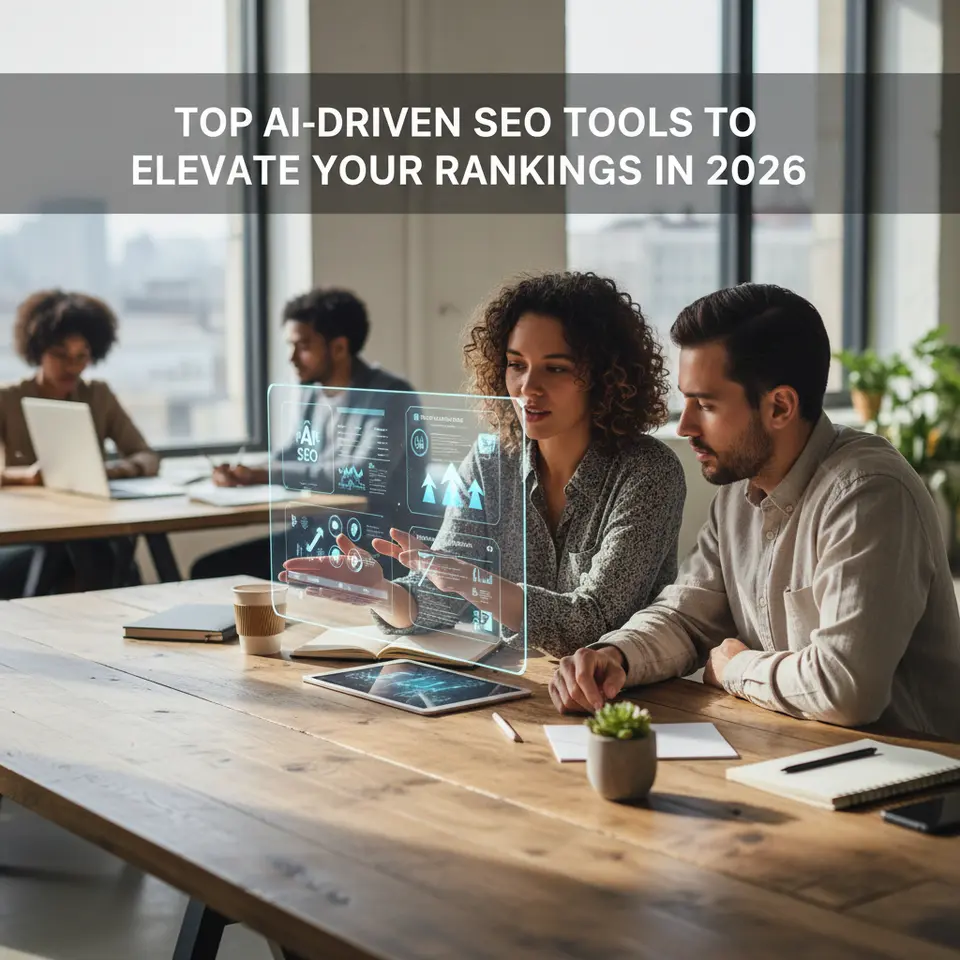
Discover how AI-driven SEO tools in SEO transforms keyword research, content creation, on-page optimization, competitive analysis, and technical audits. Learn emerging trends, automation benefits, and strategies to improve rankings, traffic, and long-term search performance growth.
In today’s digital landscape, achieving top search rankings demands more than conventional tactics; it requires harnessing AI in SEO to gain a competitive edge. As marketers and site owners strive for visibility, AI-driven solutions simplify complex tasks—from identifying high-potential keywords to streamlining technical audits. Artificial intelligence is transforming how we approach every element of search optimization, enabling precise data analysis, predictive forecasting, and automated content enhancements. In this comprehensive guide, we’ll unpack the power of AI-powered SEO tools across five pivotal areas: keyword research, on-page optimization, competitive intelligence, content creation, and technical SEO automation.
By learning to integrate these innovations into your workflow, you can boost organic traffic, improve user experience, and maximize ROI. Along the way, we’ll reference insights from the World Wide Web Consortium (W3C) and the U.S. National Institute of Standards and Technology (NIST) to ground our recommendations in authoritative research. Whether you’re an in-house marketer, agency strategist, or solo entrepreneur, this article equips you with the knowledge to thrive with AI in SEO—right now, right here.
Intelligent Keyword Research: Uncovering Golden Opportunities
Understanding user intent is the foundation of any successful SEO strategy—today, AI in SEO transforms keyword research into a data-driven science. Rather than relying on intuition or limited tools, you can tap machine learning platforms that process enormous query datasets to reveal hidden trends and long-tail opportunities. These advanced systems examine factors such as search volume volatility, click-through rates, and user engagement signals to recommend terms with the highest conversion potential.
One leading approach leverages neural networks to forecast emerging topics before they become mainstream. By analyzing social media signals, news feeds, and forum discussions, AI models flag rising keywords, giving you first-mover advantages. Another tactic employs semantic clustering: AI tools automatically group related keywords, helping you craft topic hubs that establish topical authority. This semantic analysis goes beyond basic co-occurrence, detecting nuanced connections between queries, concepts, and entities.
For best results, look for solutions that integrate directly with your CMS and analytics stack. Those with API-driven dashboards can continuously update keyword recommendations as search behaviors evolve. Additionally, ensure the platform you choose respects data privacy regulations—compliance with GDPR and CCPA is essential when processing user data, as detailed by the NIST Privacy Framework (nist.gov/privacy-framework).
By automating data collection and sophisticated analysis, AI-driven keyword research frees your team to focus on creative strategy. You gain the insights needed to build content calendars aligned with genuine demand—fueling traffic growth while minimizing wasted effort on low-value phrases.
On-Page Optimization: Automating Best Practices

Once you’ve identified target keywords, the next step is on-page optimization—an area where AI in SEO delivers dramatic efficiency gains. Traditional audits can be laborious, requiring manual checks of headings, meta descriptions, image attributes, and internal links. AI solutions automate these processes, scanning each page in seconds and pinpointing exactly where improvements will have the greatest impact.
Key on-page features to evaluate include:
- Heading Hierarchy Analysis: AI tools assess whether
<h1>through<h3>tags follow best practices, ensuring logical structure for both users and crawl bots. - Meta Tag Optimization: Dynamic suggestions for title tags and meta descriptions that balance character limits with targeted keyword usage, improving click-through rates.
- Image Accessibility: Automatic generation of alt text and descriptive filenames to boost image search visibility and comply with accessibility standards set by the W3C (w3.org/WAI).
- Schema Markup Recommendations: AI-driven identification of opportunities for rich snippets—such as FAQ blocks, breadcrumbs, and review stars—to enhance SERP real estate.
By adopting an AI-based on-page audit, you can schedule continuous monitoring rather than ad-hoc reviews. Alerts trigger when keyword density drops below a threshold or when new content lacks proper schema. This proactive stance helps maintain compliance with the latest search engine guidelines, keeping your pages optimized without manual rework.
Competitive Analysis & Backlink Insights
AI in SEO also revolutionizes competitive intelligence by surfacing strategic insights from publicly available data at scale. Instead of manually inspecting competitor sites or relying on outdated spreadsheets, you can deploy AI crawlers to map backlink profiles, content strategies, and SERP movements in real time.
Critical capabilities include:
- Backlink Opportunity Detection: Machine learning models assess domain authority, topical relevance, and link velocity to recommend outreach targets most likely to convert.
- Content Gap Analysis: AI compares your blog posts against competitors’, identifying topics you’ve not yet covered or angles that yield high engagement.
- Keyword Displacement Tracking: Automated alerts inform you when rivals overtake your ranking for key terms, enabling rapid countermeasures.
By synthesizing these insights, you can refine your link-building outreach and content ideation. Instead of generic mass emails, outreach becomes personalized and timed for maximum impact. Content calendars then prioritize articles that fill strategic gaps, guided by predictive analytics rather than guesswork.
This data-driven approach not only improves your domain’s authority but also ensures you maintain a lead over competitors in the ever-evolving SERP landscape.
AI-Enhanced Content Creation & Optimization

Creating engaging, informative, and optimized content at scale is a perennial challenge. Today, AI in SEO can streamline every stage of content production—from research to publishing—without sacrificing quality or authenticity. Modern writing assistants use natural language processing (NLP) to draft outlines, suggest subheadings, and recommend internal link structures tailored to your focus keyword and target persona.
Key benefits of AI-powered content tools include:
- Outline Generation: Instant generation of SEO-optimized outlines based on top-ranking pages, ensuring you cover each critical subtopic.
- Real-Time Editing: Grammar, readability, and tone corrections that maintain brand voice while optimizing for target keywords.
- Engagement Boosters: Suggestions for multimedia elements—such as images, charts, or embedded videos—that increase time on page and reduce bounce rates.
Coupling these AI capabilities with human expertise produces the most compelling results. Writers focus on narrative and brand storytelling, while AI handles repetitive optimization tasks. The result is consistent, high-quality content that satisfies both user expectations and search engine criteria.
Technical SEO Automation: Crawling & Fixing at Scale
Technical health underpins sustained SEO success. Issues like broken links, crawl errors, or slow page speed can undermine the best content strategies. Thankfully, AI in SEO brings sophisticated site crawlers and diagnostic engines to automate these critical functions.
Look for platforms that offer:
- Core Web Vitals Monitoring: Real-time analysis of metrics like Largest Contentful Paint and Cumulative Layout Shift, with actionable optimization advice.
- Automated Redirect Management: Detection of 404 errors and creation of server-side redirects, updating XML sitemaps without manual intervention.
- Mobile Usability Audits: Simulation of mobile user journeys to identify touch-target issues, viewport misconfigurations, and indexing blockers.
By integrating these AI-driven checks into your CI/CD pipeline, you can prevent minor code changes from triggering critical errors. Continuous monitoring alerts your team the moment page speed dips below benchmarks or when a new plugin causes crawl disruptions. This proactive approach safeguards organic rankings and frees your developers to concentrate on innovation rather than firefighting urgent fixes.
The Future of AI in SEO: Emerging Trends and Innovations

As search engines become increasingly sophisticated, the future of AI in SEO is evolving far beyond simple automation. Modern AI systems now analyze user intent, behavioral patterns, voice interactions, and contextual relevance with remarkable precision. Businesses that adapt early to these emerging innovations will gain stronger visibility, improved engagement, and long-term competitive advantages in organic search.
Why the Future of AI-Driven SEO Matters
Search algorithms continue shifting toward user experience, semantic understanding, and predictive relevance. Traditional optimization methods alone are no longer enough to maintain top rankings consistently. AI-powered technologies help marketers respond faster to algorithm updates, changing search behaviors, and evolving content expectations. In today’s highly competitive digital ecosystem, staying ahead of these trends can significantly influence brand authority and online growth.
Key Emerging Trends in AI in SEO
- Predictive Search Optimization
AI models increasingly forecast future search behaviors by analyzing historical trends, seasonal patterns, and real-time audience signals. - Voice Search and Conversational SEO
With the growth of smart assistants and voice-enabled devices, AI helps optimize content for natural language queries and conversational intent. - AI-Powered Search Personalization
Search engines now tailor results based on location, browsing history, and behavioral signals, requiring more audience-focused optimization strategies. - Visual and Multimodal Search
AI-driven image recognition and video indexing are transforming how users discover content beyond traditional text-based searches. - Automated SERP Analysis
Advanced AI tools monitor ranking fluctuations, featured snippets, and competitor movements in real time to identify new opportunities instantly.
How Businesses Can Prepare for AI-Centric SEO
- Focus on creating highly valuable, experience-driven content rather than keyword stuffing.
- Optimize websites for mobile usability, accessibility, and Core Web Vitals performance.
- Structure content clearly using semantic headings, schema markup, and FAQ sections.
- Invest in AI tools that provide actionable insights without sacrificing human creativity.
- Continuously monitor algorithm updates and adapt strategies proactively.
Emerging AI SEO Technologies and Their Impact
| AI SEO Innovation | Primary Function | Potential Benefit |
|---|---|---|
| Predictive Analytics | Forecast search trends | Earlier ranking opportunities |
| NLP Optimization | Understand user intent | Better content relevance |
| AI Content Scoring | Evaluate page quality | Improved engagement metrics |
| Voice Query Analysis | Optimize conversational searches | Increased voice search visibility |
| Automated Technical Audits | Detect website issues instantly | Faster performance improvements |
Balancing Automation with Human Expertise
Although AI dramatically improves efficiency, successful SEO still depends on human strategy, creativity, and authenticity. Businesses that combine AI-driven insights with expert storytelling and audience understanding will achieve the strongest long-term results. The future of AI in SEO is not about replacing marketers—it is about empowering them to work smarter, scale faster, and make more informed optimization decisions in an increasingly intelligent search environment.
FAQs
What is AI in SEO and how does it work?
AI in SEO uses machine learning, natural language processing, and predictive analytics to improve search engine optimization strategies. These systems analyze large amounts of search data to identify keyword opportunities, content gaps, ranking trends, and user behavior patterns. AI-powered tools can automate tasks such as technical audits, on-page optimization, internal linking, and competitor analysis. They also provide real-time recommendations that help websites improve visibility and organic traffic. By processing data faster than manual methods, AI allows marketers to make smarter and more efficient SEO decisions.
Can AI replace human SEO experts?
AI can significantly streamline SEO workflows, but it cannot fully replace human expertise. While AI handles repetitive and data-intensive tasks efficiently, human professionals provide creativity, strategic thinking, and brand understanding. SEO experts interpret audience intent, craft compelling narratives, and make nuanced decisions that AI alone may struggle to replicate. Human oversight is also essential for maintaining authenticity, ethical practices, and long-term brand positioning. The strongest SEO strategies usually combine AI-powered insights with human judgment and creativity.
How do I ensure data privacy when using AI-driven SEO tools?
Protecting data privacy starts with selecting reputable AI SEO platforms that comply with regulations such as GDPR and CCPA. Businesses should review how tools collect, store, and process user information before integrating them into workflows. Features like encryption, anonymization, and secure cloud infrastructure help reduce security risks. Regular audits and vendor security assessments can further strengthen data protection practices. Transparent privacy policies and strict access controls are also important for maintaining compliance and user trust.
What are the biggest benefits of using AI for SEO?
AI improves efficiency, accuracy, and scalability across many SEO activities. It can quickly analyze massive datasets, uncover hidden keyword opportunities, and predict ranking trends that would take humans far longer to identify manually. AI also helps automate repetitive tasks like metadata generation, site audits, and performance tracking. These capabilities allow marketers to focus more on strategic planning and creative execution. As a result, businesses can often improve productivity while achieving stronger organic growth.
Which SEO tasks can AI automate effectively?
AI tools are especially effective at automating keyword clustering, technical audits, content recommendations, competitor tracking, and reporting. They can also assist with generating meta descriptions, optimizing headings, analyzing backlinks, and identifying content gaps. Some advanced systems even monitor algorithm updates and suggest immediate optimization opportunities. Automation reduces manual workload and improves consistency across large websites. However, strategic review and quality control should still involve human oversight.
How does AI improve keyword research?
AI-powered keyword research tools analyze search trends, competition levels, and user intent more comprehensively than traditional methods. They can identify long-tail keywords, semantic relationships, and emerging search opportunities in real time. Machine learning algorithms also help predict which keywords may gain popularity in the future. This enables businesses to target high-value search queries more strategically. AI-driven keyword insights often lead to more focused content planning and improved ranking potential.
Can AI-generated content rank well on search engines?
AI-generated content can perform well when it provides valuable, accurate, and relevant information for users. Search engines prioritize helpful content rather than focusing solely on whether humans or AI created it. However, low-quality or overly generic AI content may struggle to rank competitively. Human editing is important for ensuring originality, clarity, brand voice, and factual accuracy. Combining AI assistance with expert review typically produces the strongest SEO results.
How does AI help with technical SEO?
AI can rapidly scan websites to detect technical issues that affect search visibility and user experience. It identifies broken links, duplicate content, crawl errors, slow-loading pages, and indexing problems much faster than manual reviews. Some AI tools also prioritize issues based on their potential SEO impact. Continuous monitoring helps websites respond quickly to performance declines or algorithm changes. This proactive approach improves overall site health and search engine accessibility.
Are AI SEO tools suitable for small businesses?
Yes, AI SEO tools can be highly beneficial for small businesses with limited resources. Automation helps smaller teams manage complex SEO tasks without requiring large in-house departments. Many platforms offer affordable plans with features like keyword tracking, content optimization, and competitor analysis. AI also enables businesses to make data-driven decisions more efficiently. When used strategically, these tools can help small brands compete more effectively in search rankings.
What are the risks of relying too heavily on AI in SEO?
Overdependence on AI can lead to repetitive content, weak brand differentiation, and inaccurate optimization decisions if outputs are not reviewed carefully. AI systems may occasionally misunderstand search intent or generate outdated recommendations. Excessive automation can also reduce authenticity and creativity in content strategies. Businesses should treat AI as a support tool rather than a complete replacement for human expertise. Maintaining editorial oversight and strategic direction is essential for sustainable SEO success.
How does AI impact content optimization?
AI tools analyze readability, keyword relevance, semantic structure, and user intent to improve content quality. They can recommend heading adjustments, internal links, related topics, and engagement enhancements based on ranking data. Some platforms also compare content against top-performing competitors to identify optimization opportunities. These insights help marketers create more comprehensive and search-friendly pages. Better optimization often leads to improved visibility, user engagement, and conversion rates.
What should businesses look for in an AI SEO platform?
Businesses should prioritize accuracy, transparency, ease of use, and strong data security when choosing an AI SEO solution. Important features include keyword research, technical auditing, competitor tracking, content optimization, and reporting capabilities. Integration with analytics platforms and CMS systems can also improve workflow efficiency. Reliable customer support and regular platform updates are additional indicators of quality. Selecting a tool that aligns with your business goals and technical needs ensures better long-term value.
Conclusion
AI in SEO is no longer a futuristic concept; it’s an essential toolkit for success in today’s hyper-competitive search environment. From uncovering high-value keywords and automating on-page audits to intelligence-driven competitive analysis, AI-powered content creation, and technical automation—these tools turbocharge your workflow and amplify results. By partnering human creativity with machine precision, you create content that resonates with users, aligns with search algorithms, and drives measurable growth.
As you embark on your AI-enhanced SEO journey, prioritize platforms that integrate seamlessly with your existing stack, uphold data privacy standards, and offer robust support. Pilot top contenders, measure impact against your KPIs, and refine your approach based on real-world performance. Embrace AI in SEO today, and position your website for lasting visibility, authority, and ROI.
