
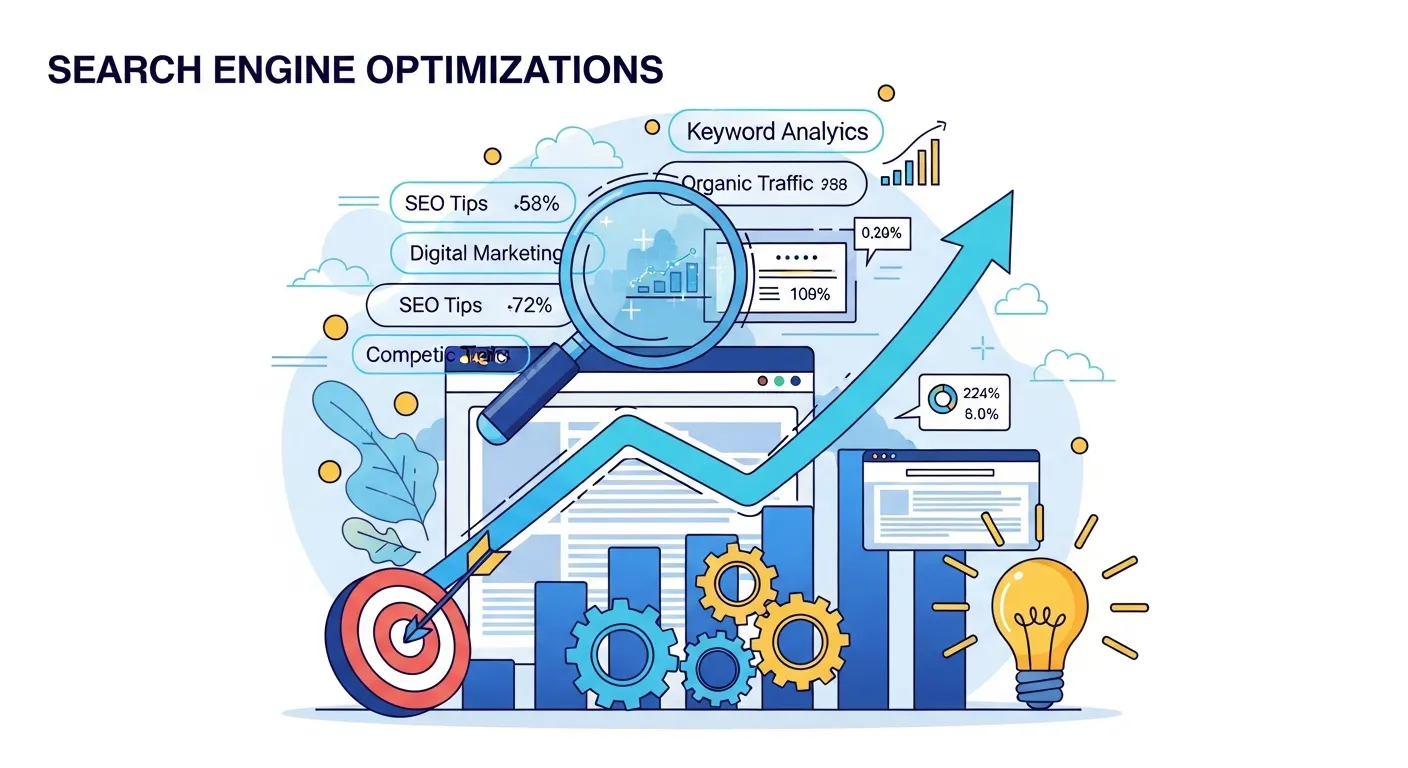
SEO helps websites improve visibility in search engines through on-page, off-page, and technical optimization. It involves keywords, content quality, backlinks, and site performance to increase organic traffic, rankings, and long-term digital growth effectively, sustainably, and successfully.
Every single second, people around the globe conduct tens of thousands of searches on search engines. They look for recipes, software solutions, medical advice, and local mechanics. Behind the scenes of those instantly generated results pages lies a complex, constantly evolving system. If you own a website, understanding this system is the key to unlocking consistent, high-quality traffic.
Search Engine Optimization is the practice of improving a website to increase its visibility in search engine results pages. When someone types a query into Google or Bing, you want your page to appear at the very top. Achieving that top spot requires a strategic approach to how you build your site, write your content, and promote your brand online. Asking yourself “how does SEO work” is the first step toward building a sustainable digital footprint.
The internet started as a small, easily navigable directory. As it expanded into a massive web of billions of pages, search engines had to develop sophisticated algorithms to sort the good from the bad. Today, the SEO process is a fundamental digital marketing strategy. It matters because organic search optimization is often the primary source of website traffic. A strong strategy builds trust, establishes authority, and brings potential customers directly to your virtual doorstep.
How Search Engines Work: Crawling, Indexing, and Ranking

Search engines act like digital librarians. They need to catalog all the information on the internet so they can quickly retrieve the exact book you want. To fully grasp how does SEO work, you must understand their three primary functions.
Crawling: How Search Engines Discover Content
Before a search engine can rank a page, it must know the page exists. Search engines use automated bots, often called spiders or crawlers, to scour the internet. These bots follow links from known pages to new ones. When you publish a new blog post, a bot eventually follows a link to that post, reads the code, and reports back. This is the very beginning of the SEO process.
Indexing: How Search Engines Organize Content
Once a crawler discovers a page, the search engine tries to understand what it is about. This process is called indexing. The engine analyzes the text, images, and video files on the page and stores this information in a massive database known as the index. If your site is not indexed, it simply will not appear in search results. Proper organic search optimization ensures your pages are easily indexable.
Ranking: Factors Influencing Search Engine Results
When a user types a query, the search engine searches its index for highly relevant content. It then orders that content to solve the user’s problem. This ordering process is your search engine ranking. Algorithms use hundreds of ranking factors to determine this order, including page speed, content relevance, and the authority of the website. To understand the intricacies of how these systems evaluate pages, you can read more about the Google search algorithm and how it shapes the digital landscape.
The Core Pillars of the SEO Process
To succeed in search engine ranking, you must balance three main pillars of optimization. Here is a breakdown of how they compare.
|
SEO Pillar |
Primary Focus |
Key Elements |
Goal |
|---|---|---|---|
|
On-Page SEO |
Content and website elements |
Keywords, headings, meta tags, content quality |
Help engines understand page relevance |
|
Off-Page SEO |
External signals and reputation |
Backlinks, social signals, brand mentions |
Build domain authority and trust |
|
Technical SEO |
Backend website structure |
Site speed, mobile-friendliness, XML sitemaps |
Ensure crawlability and good user experience |
Understanding how does SEO work means recognizing that these three elements must work together. If one area is neglected, your overall search engine ranking will suffer, no matter how strong your efforts are in the others.
On-Page SEO: Optimizing Your Content and Website

On-page SEO refers to all the actions you take directly on your web pages to improve your search engine ranking. This gives you complete control over how search engines view your specific content and is a massive part of answering how does SEO work.
Keyword Research: Finding the Right Terms
Everything begins with words. Keyword research is the process of discovering the exact phrases your target audience types into search engines. By identifying these terms, you can create content that directly answers their questions.
- Use tools to find high-volume search terms.
- Identify long-tail keywords with lower competition.
- Analyze search intent (informational, navigational, transactional).
- Map target keywords to specific pages on your website.
Effective keyword research is ongoing. It’s not just about finding a list once. Search trends shift, and new phrases become popular as industries evolve. Revisiting your keyword strategy regularly and updating your content accordingly is a best practice in the SEO process.
Content Optimization: Quality, Relevance, and Engagement
Content is the foundation of any successful SEO process. Search engines want to provide the best possible answers to users. Your content must be accurate, highly relevant to the target keyword, and engaging enough to keep visitors on the page. Use clear formatting, actionable advice, and natural language. Effective organic search optimization means writing for humans first and search engines second.
Don’t forget to update your content periodically. Outdated information will rank lower, even if it was once at the top of the results. Add new insights, refresh statistics, and address recent user questions to maintain your relevance in an ever-changing digital world.
Technical On-Page SEO
Search engines read the underlying HTML code of your pages to understand context. Title tags are the clickable blue links in search results, and they carry significant Google algorithm ranking weight. Meta descriptions provide a brief summary of the page below the title. Proper use of heading tags helps organize the content logically.
Also, make sure to use structured data, also called schema markup, whenever possible. This extra code tells search engines exactly what your content is—such as an article, recipe, product, or review—and can qualify your page for enhanced search results known as rich snippets.
Optimizing Images and Media Content
Image optimization is a critical piece of the SEO process that is often overlooked. Use descriptive file names, add alt text that clearly describes each picture for accessibility, and compress images to ensure fast loading times. Videos and other embedded media should include relevant transcripts and captions. These adjustments improve user experience and help search engines interpret the full value of your content, all contributing to improved search engine ranking.
Off-Page SEO: Building Authority and Trust

Off-page SEO involves actions taken outside of your own website to impact your search engine ranking. This process is largely about building the authority and trustworthiness of your domain.
Backlinks: The Currency of the Internet
A backlink is simply a link from another website to your own. Search engines view these links as votes of confidence. If many high-quality, authoritative websites link to your content, search engines assume your content is valuable. Earning natural, relevant backlinks is one of the most challenging but rewarding aspects of the SEO process.
There are multiple ways to build backlinks:
- Guest posting on blogs in your niche.
- Creating shareable infographics or original research.
- Building relationships with journalists for expert quotes.
- Repairing broken links by providing updated content.
However, never purchase bulk backlinks or participate in link schemes—these violate Google’s guidelines and can result in algorithmic penalties.
Brand Mentions and Social Signals
Sometimes, people will talk about your brand online without actually linking to your site. Search engines are smart enough to recognize these unlinked brand mentions. Positive mentions on reputable news sites, industry blogs, and forums contribute to your overall digital authority. A strong social media presence also amplifies your content distribution, aiding your organic search optimization efforts.
Social shares increase exposure, which can lead to natural backlink opportunities and boost your website’s authority in the eyes of both users and bots.
Technical SEO: The Hidden Foundations
Technical SEO focuses on the backend structure of your website. Even if you have the best content in the world, a technically flawed site will struggle with search engine ranking.
Site Architecture and Navigation
A logical site structure helps search engines crawl your site efficiently. Important pages should be easily accessible within a few clicks from the homepage. Creating a clear hierarchy through categories and subcategories ensures that link authority flows properly throughout the domain.
Implementing breadcrumb navigation, clear internal links, and easy-to-follow menus also improves navigation and increases the likelihood that users (and bots) will discover all your important content.
Core Web Vitals and User Experience
Core Web Vitals are a set of specific metrics that Google considers crucial to the user experience. They measure visual stability, interactivity, and loading speed. Optimizing these specific metrics is necessary to pass Google’s page experience assessment and maintain a strong Google algorithm ranking.
Paying close attention to mobile-friendliness, secure HTTPS protocols, clean URLs, eliminating intrusive pop-ups, and fixing crawl errors are all part of a successful technical SEO process. Every small improvement makes your site more welcoming to both users and crawlers.
XML Sitemaps and Robots.txt
An XML sitemap is a file containing a list of every relevant URL on your website. It acts as a roadmap for search engine crawlers, making it clear what you want indexed. The robots.txt file, meanwhile, specifies which areas of your website should not be crawled, such as admin or duplicate content pages. Keeping both files accurate and updated supports the core functionality of your SEO process and influences your likelihood of being found through organic search optimization.
Structured Data and Rich Snippets
Structured data helps search engines gain a better understanding of the context and details within your content. By using schema markup for products, recipes, articles, events, or reviews, you enable your site to be featured in enhanced result formats such as FAQ panels, product information, or star ratings. This not only increases your visibility in search but also elevates your authority and improves click-through rates.
Local SEO: Dominating Your Geographic Area
If you run a business with a physical location, local SEO is non-negotiable. It ensures that you appear when nearby customers search for your products or services.
Google Business Profile
A Google Business Profile is a free listing that allows your business to appear in Google Maps and local search results. You must claim this profile, fill out every detail accurately, and keep your opening hours up to date. Adding high-quality photos significantly boosts local visibility.
Consistent posting of updates, responding to reviews, and including keywords in your business description further boost your local SEO process. Regular activity signals to Google that your business is reliable and active, which supports stronger search engine ranking in your community.
Local Citations and Reviews
A citation is any online mention of your business name, address, and phone number. These citations appear in directories and social platforms. Reviews are also a major local ranking factor. Encourage your happy customers to leave positive reviews to show search engines you are an active, trustworthy business.
Having consistent NAP (Name, Address, Phone) information across all platforms—Yelp, TripAdvisor, Facebook, and directories—reinforces your legitimacy and reliability. Google considers this data when determining its search engine ranking for local searches.
Measuring SEO Success: Tools and Metrics
You cannot improve what you do not measure. Tracking your SEO process requires specific tools to gather actionable data and understand exactly how does SEO work for your specific site.
Tracking Website Performance
Google Analytics is a free platform that tracks user behavior on your site. It shows you how many people visit, which pages they read the most, and how long they stay. By monitoring your organic traffic metrics, you can see if your organic search optimization efforts are bringing in more visitors over time.
Segment traffic sources to distinguish between organic, paid, direct, and referral visits. Use bounce rate and average session duration to assess how engaging your content is with search-driven visitors.
Monitoring Search Presence
Google Search Console provides direct communication between your website and Google. It alerts you to crawling errors, security issues, and indexing problems. It also shows you the exact search queries people used to find your site, helping you monitor your search engine ranking effectively.
Among its various features, Google Search Console tracks your impressions, clicks, and average position for each keyword. This data guides optimization, helping you identify low-hanging fruit for quick ranking wins.
Keyword Tracking and Competitor Analysis
In addition to basic tools, consider using advanced SEO platforms like Ahrefs, SEMrush, or Moz for keyword tracking, competitor analysis, and backlink auditing. These tools offer a dashboard-style overview of your keyword positions over time and identify which search engine ranking opportunities your competitors are capitalizing on. Tracking multiple keywords allows you to see which SEO process steps are most effective and rapidly course-correct as needed.
Goal Conversion Tracking
Ultimately, SEO is about achieving specific business outcomes. Track conversions such as newsletter signups, product purchases, demo requests, or contact form submissions that arrive from organic search optimization efforts. Establishing clear goals in Google Analytics or similar platforms allows you to calculate the ROI of your SEO process and clearly tie improvements in search engine ranking to growth in revenue or leads.
Reporting and Reviewing Progress
Regular monitoring and reporting is crucial. Create monthly or quarterly reports that highlight changes in organic traffic, rankings, conversions, and technical errors. Use visual dashboards to simplify findings and present progress to your team or stakeholders. This not only answers the question “how does SEO work” but demonstrates the tangible results of ongoing optimization.
Advanced SEO Strategies and Ongoing Optimization
To achieve and sustain top positions in search engine ranking, you must continually refine your approach. The SEO process is never static.
Content Refresh and Expansion
Old content tends to lose its rankings over time. Conduct regular content audits to update or expand valuable blog posts and web pages. Add new research, statistics, internal links, multimedia elements, and targeted keywords. Expanding content to cover additional user questions keeps it comprehensive, which is favored by Google algorithm ranking.
User Intent and Experience
Always match your content to user intent. Analyze the types of pages that currently rank—are they detailed guides, quick answers, product pages, or videos? Align your strategy accordingly. Incorporate interactive features—calculators, quizzes, checklists—that increase engagement. The longer users stay, the higher their likelihood of converting, which supports improved search engine ranking.
International and Multilingual SEO
If your audience is global, consider translating your site into other languages. Use hreflang tags to communicate with Google about which content is intended for which region or language. International SEO requires country-targeted keyword research, local link building, and cultural adaptation of both your site design and content.
SEO Myths, Pitfalls, and Staying Current
SEO is filled with outdated or harmful advice. To truly answer “how does SEO work,” avoid common pitfalls and stay informed with trusted sources.
Common SEO Myths
- More keywords are always better (false; keyword stuffing hurts rankings)
- Meta keywords improve ranking (false; Google ignores meta keywords)
- You only need SEO once (false; continuous effort is essential)
Staying Updated with Search Engine Changes
Google, Bing, and other engines frequently update their algorithms. Stay informed by following reputable SEO news sources, industry blogs, and tools that track algorithm changes. For detailed and up-to-date explanations of algorithm shifts, regularly check resources like the Google search algorithm page.
Frequently Asked Questions
How does SEO work exactly?
SEO works by optimizing a website’s content, technical structure, and external authority to appeal to search engine algorithms. When a user searches for a specific term, the search engine scans its index to find the most relevant, high-quality result. By aligning your website with these algorithm preferences, you earn higher visibility and traffic.
How long does the SEO process take?
The SEO process is a long-term strategy that typically takes three to six months to show significant results. Search engines need time to crawl your new content, evaluate your technical changes, and assess your growing backlink profile. Consistent effort and patience are required to build a sustainable search engine ranking.
What is organic search optimization?
Organic search optimization refers to the natural methods used to improve a website’s visibility without paying for advertising. It involves researching keywords, writing high-quality content, and improving site speed to earn placements in the free search results. You can explore a comprehensive guide to search engine optimization to master these natural growth strategies.
How does Google algorithm ranking work?
Google algorithm ranking works by evaluating hundreds of factors to determine which page best answers a user’s query. It looks at keyword relevance, domain authority, page loading speed, and mobile-friendliness. The algorithm constantly updates to ensure users receive the most helpful, accurate, and trustworthy information available.
Are backlinks still important for SEO?
Yes, backlinks remain one of the most critical factors for improving your search engine ranking. They act as digital endorsements from other websites, signaling to search engines that your content is credible and valuable. Earning high-quality backlinks from reputable sources heavily influences your overall domain authority.
Why is mobile-friendliness crucial for SEO?
Search engines primarily use the mobile version of a website for indexing and ranking because the majority of global internet users search on mobile devices. If your site is difficult to navigate on a smartphone, your Google algorithm ranking will drop significantly. A responsive design ensures a positive user experience across all devices.
What is the difference between On-Page and Off-Page SEO?
On-page SEO involves optimizing elements directly on your website, such as writing content, formatting headings, and improving page speed. Off-page SEO focuses on external factors that influence your site’s reputation, such as earning backlinks and gaining social media mentions. Both are essential components of a complete SEO process.
Can I do SEO entirely by myself?
Yes, you can absolutely handle your own organic search optimization if you are willing to learn the fundamentals and invest the time. Many website owners successfully improve their search engine ranking by focusing on excellent content and basic technical fixes. However, highly competitive industries often require professional assistance.
How often do search algorithms change?
Search engines update their algorithms thousands of times a year, making minor adjustments to improve search quality continuously. They also release broad core updates a few times annually, which can significantly shift how pages are ranked. Staying informed about these changes is a vital part of understanding how does SEO work over time.
Does social media impact my search engine ranking?
Social media shares do not directly impact your Google algorithm ranking, but they play a vital supporting role in the SEO process. Sharing content on social platforms increases visibility, drives direct traffic, and improves brand awareness. This increased exposure often leads to natural backlinks, which directly boost your search performance.
By focusing on all aspects discussed in this comprehensive guide—on-page, off-page, and technical SEO—you can successfully decode “how does SEO work” for your brand or business. Continuous learning, consistent execution, and regular optimization—all rooted in understanding the latest developments—will put you on the path to sustainable, long-term search engine ranking results.
